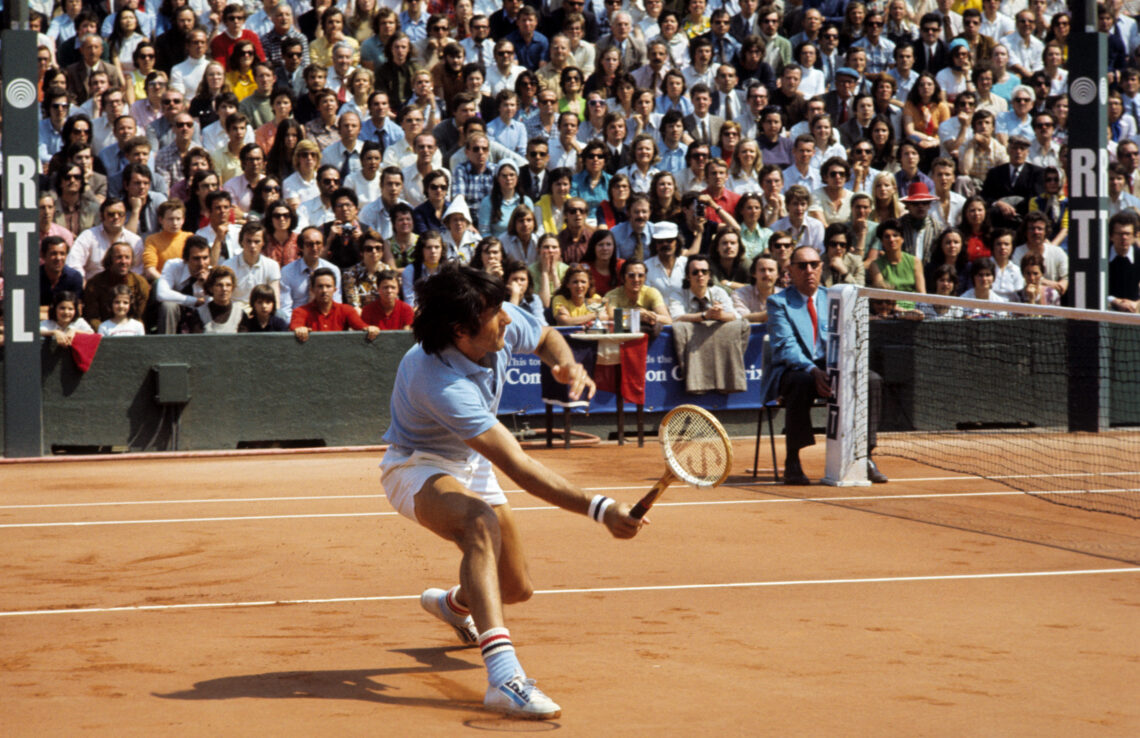


Nowadays, tennis players are blessed with supreme power, given they are prized athletes who have their own backing aside from the sport.
However, many years ago, those in the same spot struggled for equality and pay that perhaps justified what they contributed to the growth and entertainment of tennis.
And yet, despite this, very few from that era were afraid of voicing their opinions on issues they deemed integral to either the growth of the sport or their own personal preference.
On one occasion back in 1977, a two-time Grand Slam champion even refused to play ever again unless tennis made a huge rule change to outlaw one piece of equipment.
When Ilie Nastase refused to play unless tennis banned a piece of equipment
The star in question was Ilie Nastase, a Romanian player widely regarded as the best male tennis export his country has ever produced.
And, at the time of this controversy, he had already won his two major titles and been ranked as the world number one. His opinion held weight.
If you were in charge of tennis, what is the first rule you would change?

He used that clout to try to ensure that the spaghetti racket was never seen again in tennis.
Created in the early 1970s by German Werner Fischer, it featured a double-strung system with five pairs of cross strings that allowed for massively exaggerated topspin. This gave even amateur players a better chance of unsettling the world’s best, leaving Nastase furious.
In one instance, after he had lost to an opponent using that racket, the Romanian claimed: “That’s the first time I’ve played against someone using one of those things. It’s also the last. In future, I shall refuse to play.”
Ironically, he later adopted it himself before it was banned in 1978.
Although now an outlawed artefact, the spaghetti racket was crucial in initiating a revamp of the sport’s equipment standards, which continue to evolve even today.
How good was Ilie Nastase?
Nastase was, for a period, the best player in the world. His induction into the Tennis Hall of Fame in YEAR should be enough to justify that notion.
However, his greatest period inarguably came in the early 1970s, way before this controversy began. There, he won his maiden major title at the US Open in 1972, before following it up with a French Open triumph the following year.
See how you get on with this tricky tennis quiz!
He was also a two-time Wimbledon finalist.
Nastase remained a keen doubles specialist throughout his career too, claiming another five Grand Slam titles in this discipline as his dominance spread across various formats.
The 79-year-old stands as living proof that, if players stand up for what they believe in with enough conviction, they can make huge changes to the sport.
Those complaining about the tennis schedule might consider taking a leaf out of his book.