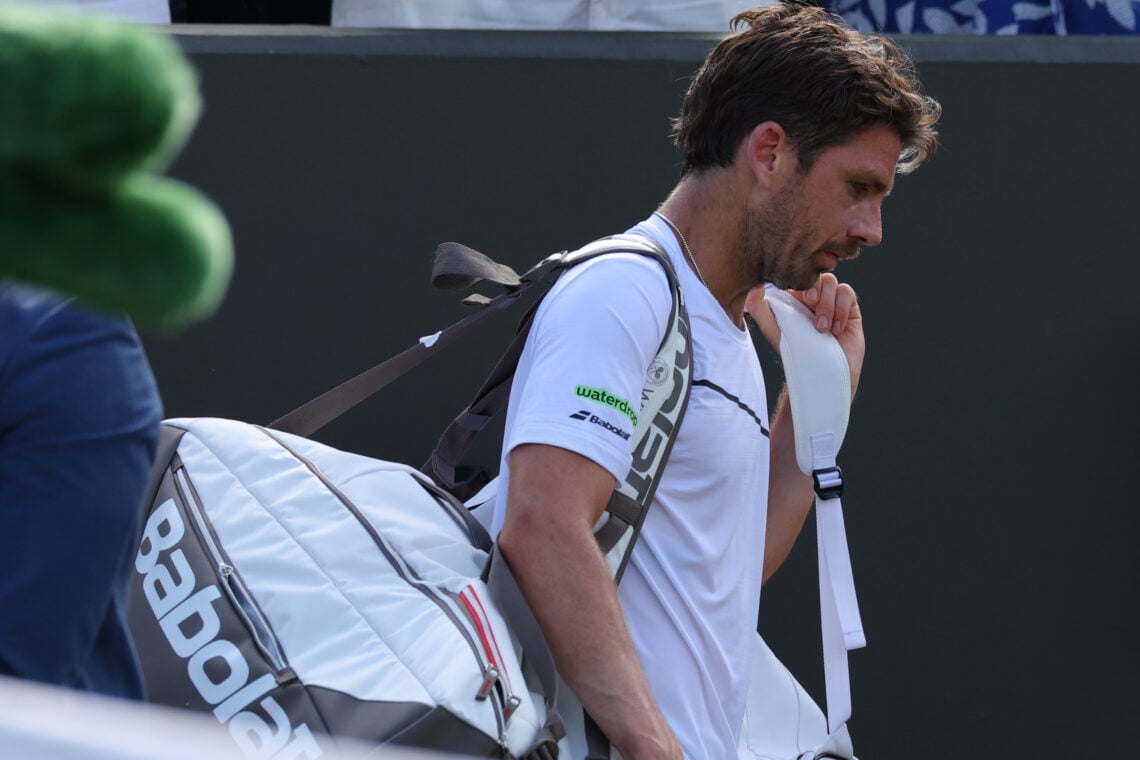


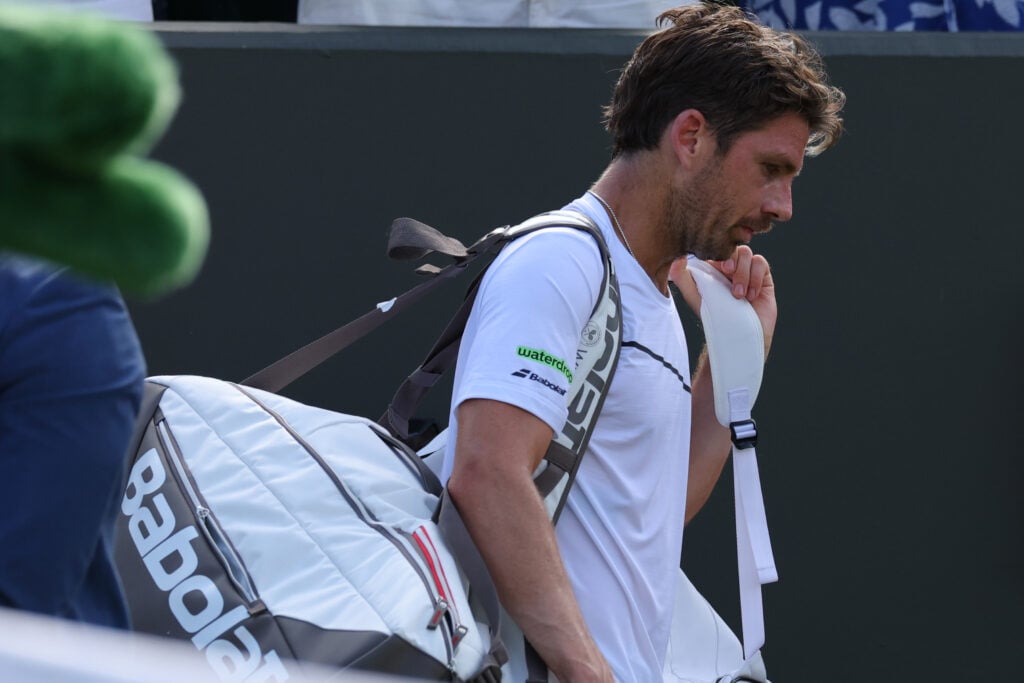
10 British players lost on the first day of Wimbledon, including Cameron Norrie and Harriet Dart
When Jack Draper and Emma Raducanu pulled out of Wimbledon at the last minute, you knew it wasn’t going to be a great tournament for the British players, but few predicted it would be this bad.
How bad is the state of British tennis right now?

Not one home-grown star secured victory on the opening day of the tournament, leaving British tennis in a state of uncertainty and despair.
If the good times are to return, those in charge must make changes, and they must make them now.
British tennis must make three changes immediately including greater investment
One potential silver lining from a dark day in British tennis is that the problems can’t be covered up any longer.
The issue with British tennis is clear. There isn’t enough talent, and the talent doesn’t play often enough.
British players on the first day of Wimbledon (0-10)
| British player | Opponent | Opponent’s rank | Result | Score |
| Felix Gill | Rafael Jodar | 26th | LOSS | 3-6, 3-6, 5-7 |
| Max Basing | Shintaro Mochizuki | 151st | LOSS | 3-6, 0-6, 0-6 |
| Cameron Norrie | Michael Zheng | 144th | LOSS | 7-6, 2-6, 7-6, 3-6, 6-7 |
| Oliver Tarvet | Arthur Rinderknech | 28th | LOSS | 6-7, 6-7, 6-4, 5-7 |
| Harriet Dart | Jelena Ostapenko | 31st | LOSS | 3-6, 6-3, 4-6 |
| Mimi Xu | Daria Kasatkina | 65th | LOSS | 2-6, 6-3, 2-6 |
| Alicia Dudeney | Alycia Parks | 81st | LOSS | 3-6, 3-6 |
| Hannah Klugman | Barbora Krejcikova | 38th | LOSS | 1-6, 4-6 |
| Mika Stojsavljevic | Belinda Bencic | 11th | LOSS | 2-6, 1-6 |
| Francesca Jones | Diane Parry | 49th | LOSS | 4-6, 4-6 |
So, to ‘fix’ British tennis, where do you start?
Well, as with anything else, money and investment is the key.
The LTA [Lawn Tennis Association] must reallocate funds to attract and develop the best players more sustainably.
We cannot rely on generational talents like Andy Murray or Tim Henman; instead, British tennis must develop a strength in depth like France, Australia, or the USA.
Of the four Grand Slam nations, Great Britain has the fewest singles players ranked inside the world’s top 100, by some margin.
Top-100 players from Grand Slam nations
- 1. USA – 28
- 2. France – 15
- 3. Australia – 9
- 4. Great Britain – 5
Part of the issue with British tennis and the LTA is that so much focus is given to the grass-court season.
Every British tour-level event is held on grass and many of our best players pick up the majority of their ranking points during that stretch of the season.
The issue is that the grass-court season is far shorter than both the clay-court and hard-court seasons.
Therefore, those at the top of British tennis have played a role in developing a system in which the best players have become specialised on the least-used surface on tour.
If British players were more comfortable on hard and clay courts, they would be more likely to compete year-round, rather than for a month or two in the summer.
To address this, the LTA should consider investing in clay and hard courts, with a view to hosting tournaments on those surfaces in the not-too-distant future.
They must also consider investing in talent around the country, making the sport more accessible.
For too long, tennis has been a sport for the rich and elite, while those from less well-off backgrounds haven’t been able to show their talents.
There is surely untapped potential in England, Wales, Scotland, and Northern Ireland that is just itching to show what they have to offer.
Give them the platform to do just that, and perhaps we will see more players winning at Wimbledon and the three other Grand Slam tournaments.
Secondly, British tennis and the LTA need to reconsider youth training.
It cannot be a coincidence that the two greatest players in British tennis are as injury-prone as anyone else on tour.
Draper and Raducanu both possess the ability to beat the very best in men’s and women’s tennis, but they just aren’t fit enough to show it.

Whether they were overtrained or undertrained as juniors, their injuries have exposed a major issue.
The LTA cannot afford to develop injury-prone players, and if there is anything that can be done to address training regimes to prevent future stars from encountering the same problem, they should act fast.
Finally, there must be a rethink over the allocation of wild cards.
Aside from the controversy surrounding Dan Evans’ wild card snub, a strategy change is required.
Players who lose in the first round of Wimbledon or Queen’s every year shouldn’t get wild cards for either the main draw or qualifying for the sake of it.
There must be a real focus on the younger talent, giving them opportunities to challenge world-class players.
The likes of Henry Searle and Lui Maxted both have the potential to go far, but neither were given main draw wild cards this year.
Looking ahead to 2027 and beyond, the wild cards should go to young British players first, then anyone else who requires one, not the other way around.
Was day one of Wimbledon really that bad?
Change is needed, but was day one of Wimbledon really that bad for British tennis?
After her first-round exit, Francesca Jones suggested British players were given ‘tough draws’, although that’s a fairly weak excuse.
None of the 10 British players who lost on day one faced a top-10 opponent, and only three played someone ranked inside the top 30.
In fact, the average rank of British opponents on the first day of Wimbledon was 62nd.
Not recording a single win against that level of opposition just isn’t good enough.