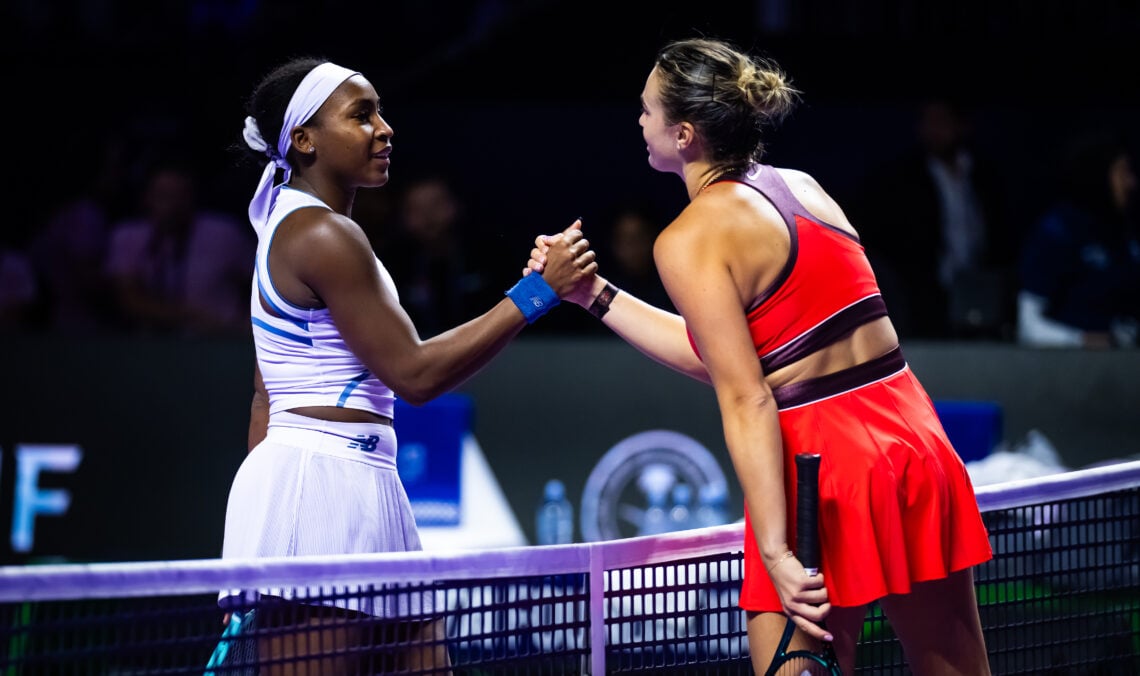


Tennis players are finally starting to get serious about the prospect of a boycott, as they seek to address the financial issues that plague their sport.
It has been a topic mooted for years now, but never before has it seemed so real.
After all, the first media day for the Italian Open saw all of the top WTA players asked about this topic, with most giving intriguing answers that supported the suggestion.
Now, Tracy Austin and Sam Querrey have offered their verdicts, as two former players from different eras who have remained involved in the sport ever since their respective retirements.
Why do tennis players want to boycott the Grand Slams?
The reason why players are threatening to boycott is clear.
They want a higher percentage of the revenue generated by the four Grand Slams and a greater say in scheduling, and are well within their rights to demand it.
Is a French Open boycott realistic?
Players aren't happy with the prize money on offer…

After all, it’s been shown that players in the NBA receive 51% of the revenue gained by the league, whilst the NHL and MLB offer 50%.
Meanwhile, to use Roland Garros as an example, they offer just 14.9% of the revenue to players, who are the true stars of the show.
Aryna Sabalenka kickstarted this debate by giving her thoughts on the boycott earlier this week, admitting: “I think at some point we will boycott it. I feel like that’s going to be the only way to kind of fight for our rights.”
Coco Gauff echoed that sentiment, admitting she could ‘100%’ see herself involved in such a movement.
Sam Querrey and Tracy Austin give advice to tennis stars calling for a Grand Slam boycott
Speaking on Tennis Channel, both Sam Querrey and Tracy Austin offered their verdict on not only why this is being mooted, but the actual likelihood of it being acted upon.
The former of the two pundits began by insisting that, for a boycott to be effective, they need ‘players ranked one to 100 or one to 200 on the men’s side and the women’s side, and they all have to get on the same page’.
He continued: “You can’t have 60% of the players want to boycott, the others don’t want to boycott, but I agree that they’re underpaid.
“I know you look at the numbers; the winner gets $3.7 million. That’s a lot of money, yes. But that doesn’t mean that they’re not underpaid; they are underpaid. I think the winners should get $5, $6 million.
“I think first-round losers of these majors shouldn’t, you know, they get about $80, 90,000. They should get $200,000.”
Austin added: “I think the tennis players, what they see is they see some of the other sports where it’s closer to 40 and 50% of the revenue, so they feel like they should share more.
“And when Coco Gauff, actually, she was asked after Sabalenka, and she said, you know, this is more for the players I feel that are ranked 100 to 200 as well, because they’re living paycheque to paycheque. The top players have plenty of endorsements off the court. They don’t need it as much.”
She agreed, but echoed Querrey’s claims that all of the players need to unite, not just a vocal few.
The likelihood of tennis players actually boycotting the Grand Slams
A graphic flashed up on screen during their debate showcased the aforementioned statistics, about tennis players only seeing 14.9% of revenue compared to around 50% in other major sports.
“It’s embarrassing,” Querrey claimed before Austin was asked to rate the chances of this boycott actually happening.
She suggested: “I agree there’ll have to be more talk. It would have to be more players getting together and having these meetings.
“I’ve heard that there have been plenty of meetings over the last year, but I think maybe now this is bringing it to a heightened place.
“It’s a collective disappointment on the ATP and the WTA. So I think it also has to move both sides as well.”
Querrey was not so optimistic, giving them an ‘under 5%’ chance of it actually happening despite his hopes that it would.