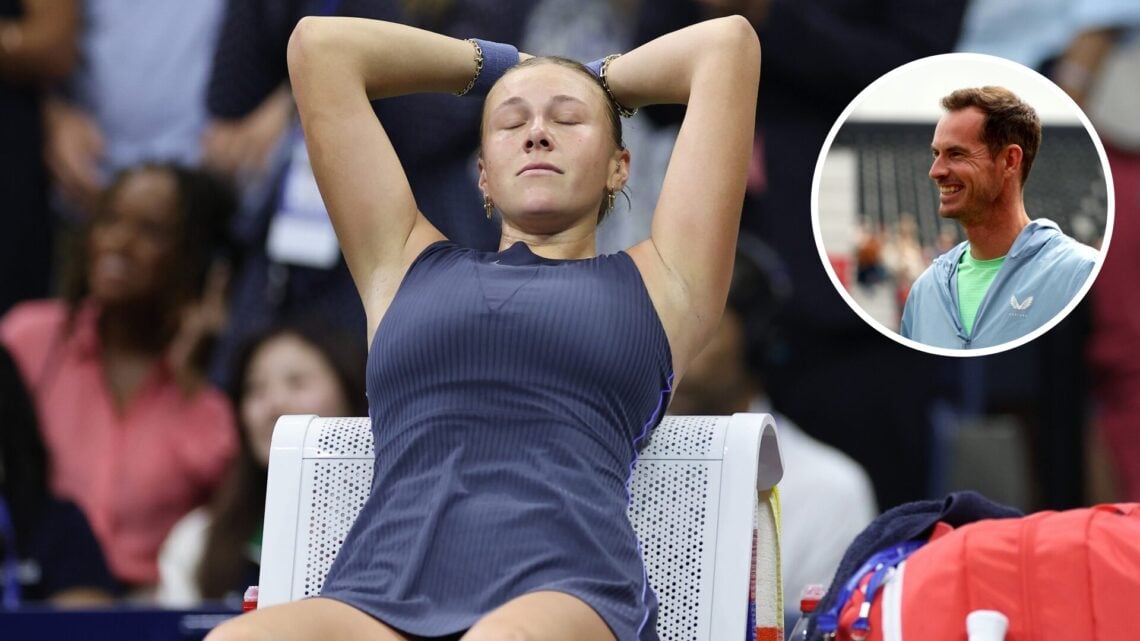


Amanda Anisimova can take inspiration from British legend Andy Murray after losing back-to-back Grand Slam finals.
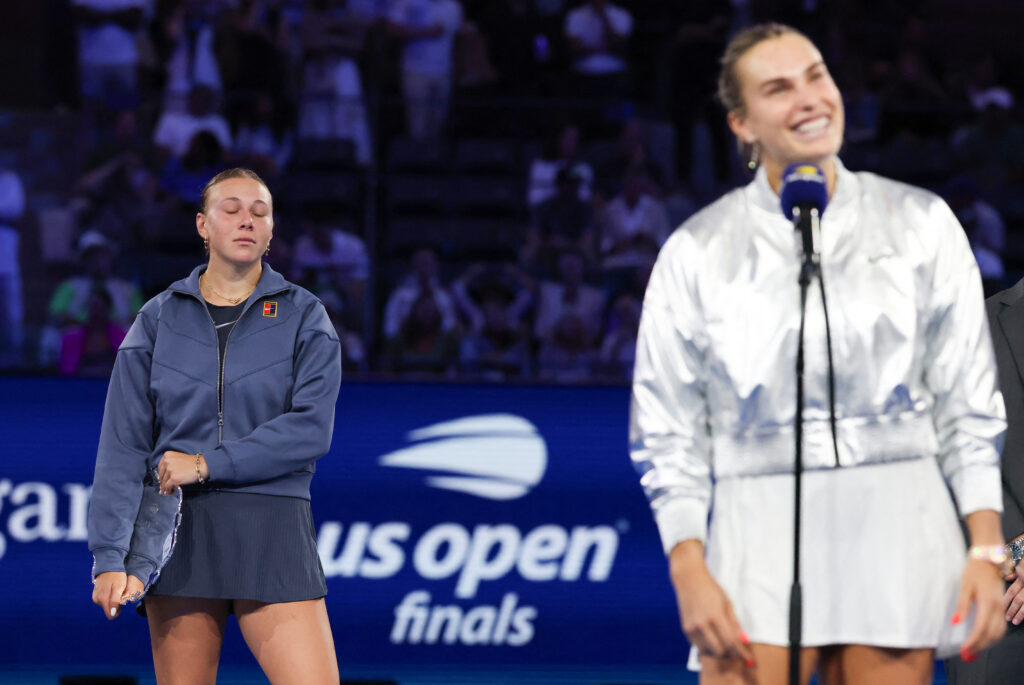
The American failed to win a single game in an extraordinary Wimbledon final against Iga Swiatek, before narrowly losing the US Open final to world number one Aryna Sabalenka.
Anisimova’s talent and determination helped her achieve so much during 2025, but she has failed to navigate the final hurdle at Grand Slam events.
Losing consecutive Grand Slam events is likely an extremely infuriating and disheartening outcome. However, the young American must take solace in the fact that she is far from the first player to lose two Grand Slam finals.
In fact, Anisimova can find comfort in knowing that Andy Murray lost four Grand Slam finals before going on to become one of the greatest players of his generation.
Amanda Anisimova can take inspiration from Andy Murray’s 2012 Wimbledon final loss
In 2012, Andy Murray lost an excruciating Wimbledon final to Roger Federer. It was the Brit’s fourth Grand Slam final loss during the middle portion of his career: a period during which the pressure to win a Grand Slam title was increasing with every passing tournament.
Understandably, Murray was distraught after losing to Roger Federer. However, the Brit demonstrated exemplary willpower, defeating Federer in the Olympic Gold Medal match just a few weeks later.
As per BBC Sport, Murray said: “I was unbelievably upset, disappointed and all of those things.
“I said to myself after that I may never win a Grand Slam. I was working as hard as I could work and getting close, but it was never quite enough.
| Tournament | Opponent in Final | Score |
| 2008 US Open | Roger Federer | 6-2 7-5 6-2 |
| 2010 Australian Open | Roger Federer | 6-3 6-4 7-6 |
| 2011 Australian Open | Novak Djokovic | 6-4 6-2 6-3 |
| 2012 Wimbledon | Roger Federer | 4-6 7-5 6-3 6-4 |
“But the Olympics was coming up and I had to make the most of it. I got back on the practice court and ended up having probably the most important week of my tennis career.”
There can be little doubt that Amanda Anisimova has demonstrated her ability to bounce back in 2025. The American showed remarkable resilience to bounce back from her loss in the Wimbledon final, defeating Iga Swiatek in the very next Grand Slam tournament.
However, Murray’s experience is invaluable. As a player who struggled for years to overcome the likes of Novak Djokovic and Roger Federer in Grand Slam finals, he understands what it takes to succeed after multiple Grand Slam final losses.
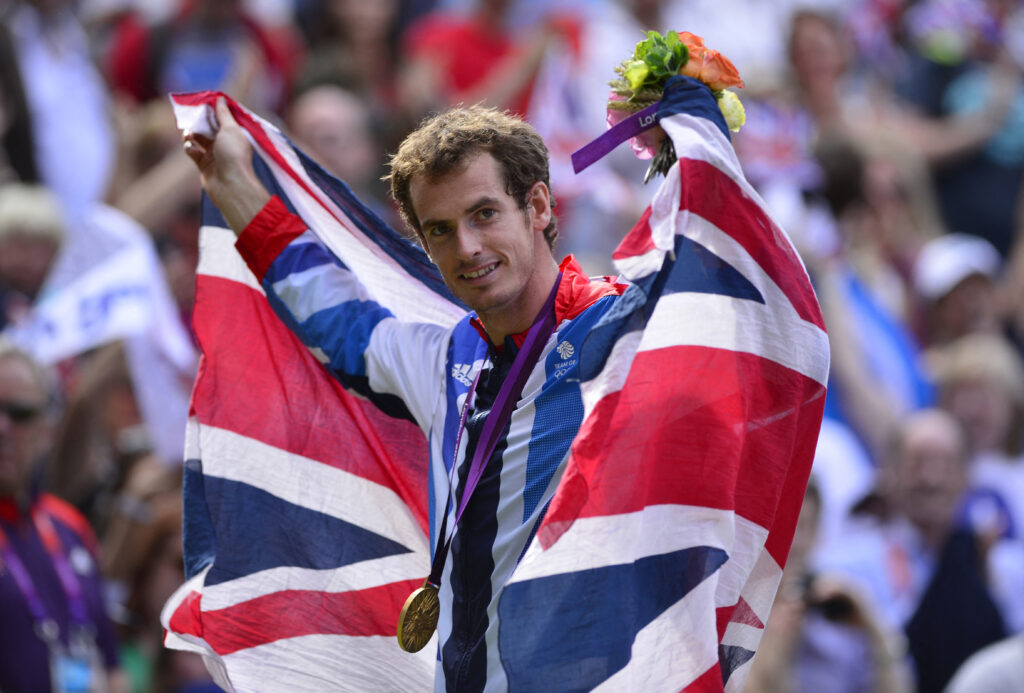
Therefore, if Anisimova can build upon the resilience she has already demonstrated in 2025, while taking inspiration from Murray’s experience, she will unquestionably win a Grand Slam singles title in the future.
Andy Murray captured his first Grand Slam title in 2012
Murray showcased his ironclad mental state later in 2012, capturing his first Grand Slam title at the US Open.
Murray defeated Novak Djokovic in the final, 7–6, 7–5, 2–6, 3–6, 6–2. By doing so, he became the first British man to win a Grand Slam title since Fred Perry at the 1936 US Open.
The following year, Murray would capture his first Wimbledon title, defeating Djokovic again in the final. He repeated the feat in 2016, before winning a second Gold Medal at the 2016 Rio Olympics.
Murray retired eight years later, at the 2024 Paris Olympics, while playing doubles for Great Britain alongside Dan Evans.