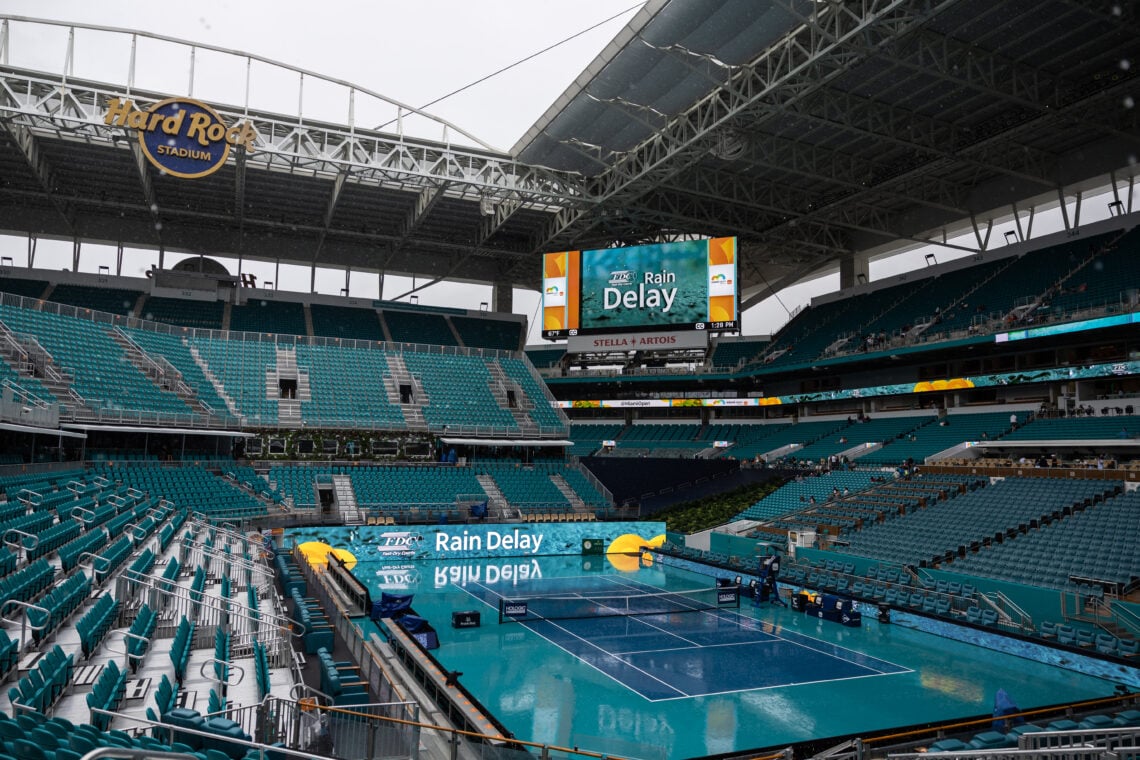


The Miami Open has failed to excite thus far.
The tournament, which forms half of the North American ‘sunshine double,’ has been an established ATP event since 1985.
The event was first made a Masters 1000 event in 1990, and has since been won by the likes of Roger Federer, Novak Djokovic and Carlos Alcaraz.
Last five ATP Miami Open champions
- 2025: Jakub Mensik
- 2024: Jannik Sinner
- 2023: Daniil Medvedev
- 2022: Carlos Alcaraz
- 2021: Hubert Hurkacz
However, the tournament is clearly second-best when comparing it to Indian Wells, which has emerged as the premier North American March-time event in recent years.
The Miami Open simply does not capture the imagination of tennis fans like many of its contemporaries, and tennis governing bodies should seriously consider moving the tournament elsewhere.
The Miami Open should be scrapped and replaced by a new South American tournament
The Miami Open has underwhelmed thus far, with rain delays and less than inspiring crowd attendances raising a pertinent question: should the Miami Open continue to take place?
The simple answer is, no.
Simply put, both the ATP and WTA are missing a trick by not having a major event in South America, and replacing the Miami Open with a South American event would be the correct move.
With the imminent rise of Brazilian star Joao Fonseca and an avid fanbase eagerly waiting for a significant event to take place on the continent, 2027 would be the perfect opportunity to introduce Masters 1000 and WTA 1000 events on the continent; replacing the Miami Open.
Will Joao Fonseca be the man to break up Carlos Alcaraz and Jannik Sinner’s dominance?
If not, who will be?
While some significant events already take place on the continent, including the Buenos Aires Open and Rio Open, the continent lacks a staple event.
The obvious solution would be to scrap the Miami Open and expand the Rio Open to a Masters 1000 event; encouraging star players to travel to the continent to compete.
The event is currently held on clay courts, which could tie in with the clay-court swing that currently starts in April.
Otherwise, the event could be moved onto hard courts, as Joao Fonseca stated earlier this year.
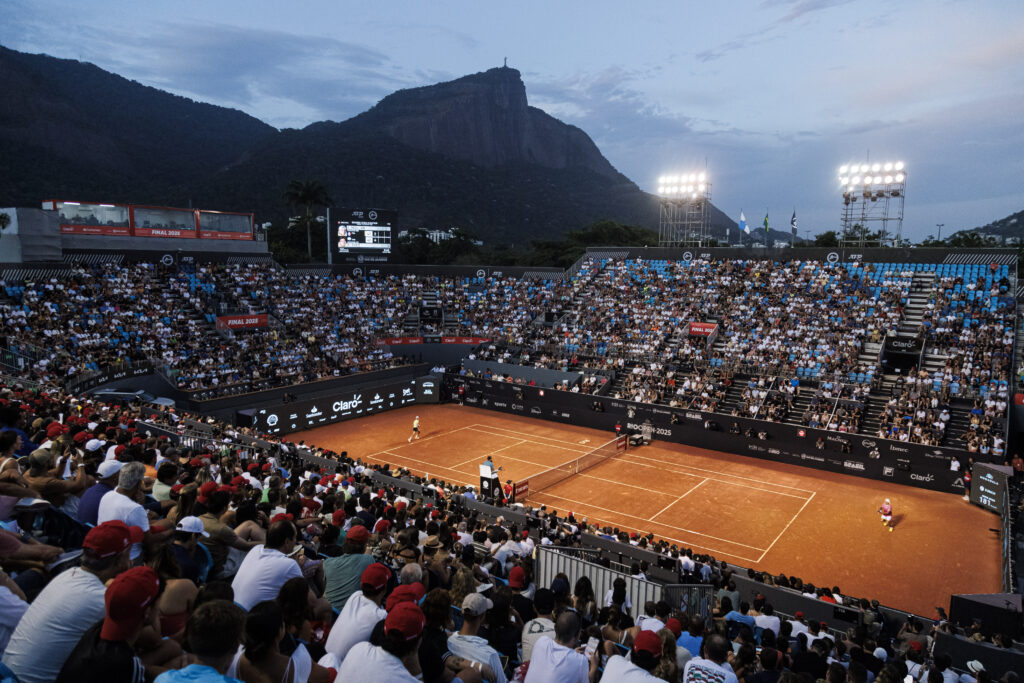
Of course, adding a new event – instead of expanding the Rio Open – is an alternative; and this potential addition could further increase the circuit’s brand exposure in South America.
What about player travel?
When discussing this matter, one must consider the element of travel – as players would be travelling for longer periods should the Miami Open be replaced by a South American event.
However, simply put, players at the top end of the professional circuits have the means and ability to do so.
If you were in charge of tennis, what is the first rule you would change?

Of course, extended travel will take its toll on any individual, including an elite athlete. There can be no denying that those on both the ATP Tour and WTA Tour work extremely hard in travelling to every possible destination on the globe in order to compete.
However, travel is a part of the job of being a professional tennis player. Those competing in the biggest events on the circuit are extremely well paid and would have the resources necessary to participate in a South American Masters event.