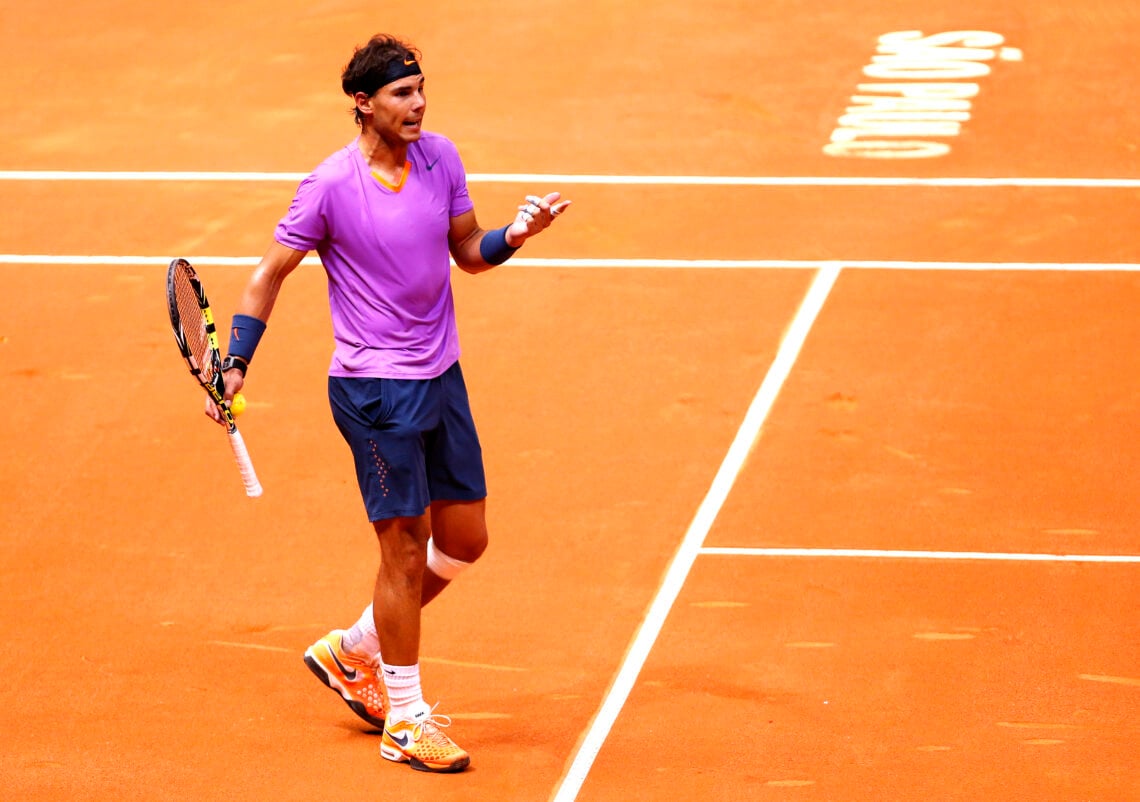


In 2013, the ATP Tour altered rules regarding the amount of time allowed for rest between points.
Before the rule change, a player who took more than 25 seconds between two points was given a warning. If they repeated the infringement, a point penalty would be issued.
This rule was altered in 2013 – servers taking over 25 seconds more than once would be penalised with a fault [losing a first serve], instead of losing a point. Returners who violated the rule would still be docked a point.
Rafael Nadal, a 22-time Grand Slam champion, took particular issue with the 25-second rule in 2013.
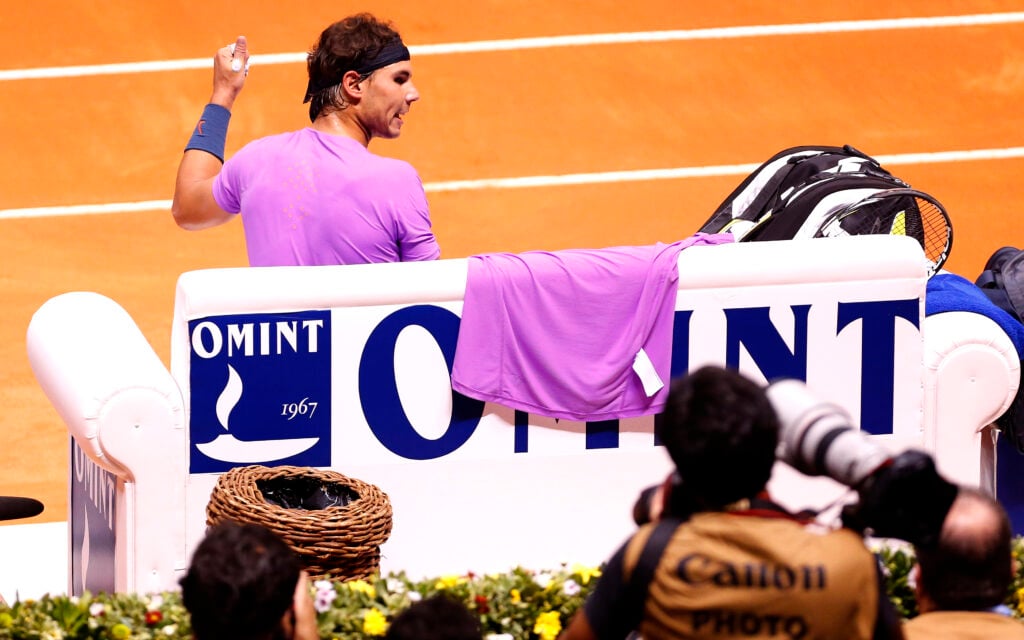
Rafael Nadal said players were ‘not very happy’ with the 25-second rule
As reported by Sports Illustrated, Nadal said: “People like to see great rallies, long matches, and for that to happen, the 25 seconds are not enough.
“If the ATP wants a sport which is faster but doesn’t take into consideration a lot of strategy or great rallies, then it’s right doing this. I think the players in the locker rooms are not very happy with that rule.”
A week earlier, Nadal – who recently lifted the lid on his retirement – admitted that he was ‘slow’ between points, but argued that the quality of matches would suffer with the 25-second rule in place.
He told L’Equipe: “I’m slow, I recognise that. But for me, to apply those 25 seconds in all circumstances will affect the quality of the game.
“If you strictly apply 25 seconds, my US Open final in 2011, especially the third set, and the Australian Open final in 2012 would not have the same level. It’s impossible to keep on playing incredible points one after the other if you don’t have time to take a breath.
Has there ever been a sadder retirement than Rafael Nadal’s in 2024?
“It happens that I’m slow after a normal point. When the umpires sanctions me then or gives me a warning, no problem. But if you’ve just played a crazy point, no.
“Otherwise, what will happen after an enormous point is that your serve or the shot after that will miss the line by 3 metres. That’s not tennis, that.
“They tell me that those changes are made for the tv public, but don’t you think that those people watching tennis on TV would prefer beautiful points being disputed? No?”
From 2020 onwards, every ATP Tour event has used a shot-clock to enforce the 25-second rule.
What did Novak Djokovic say about the rule?
As reported by Sports Illustrated on January 11, 2013, Novak Djokovic supported the rule changes made, referencing the 2012 Australian Open final during his argument.
Djokovic said: “I think with the new rule and everything we will be shortening our time between points, and as much as it was a pleasure to be part of such a classic match and in history, I think nobody likes to spend six hours on the court.”
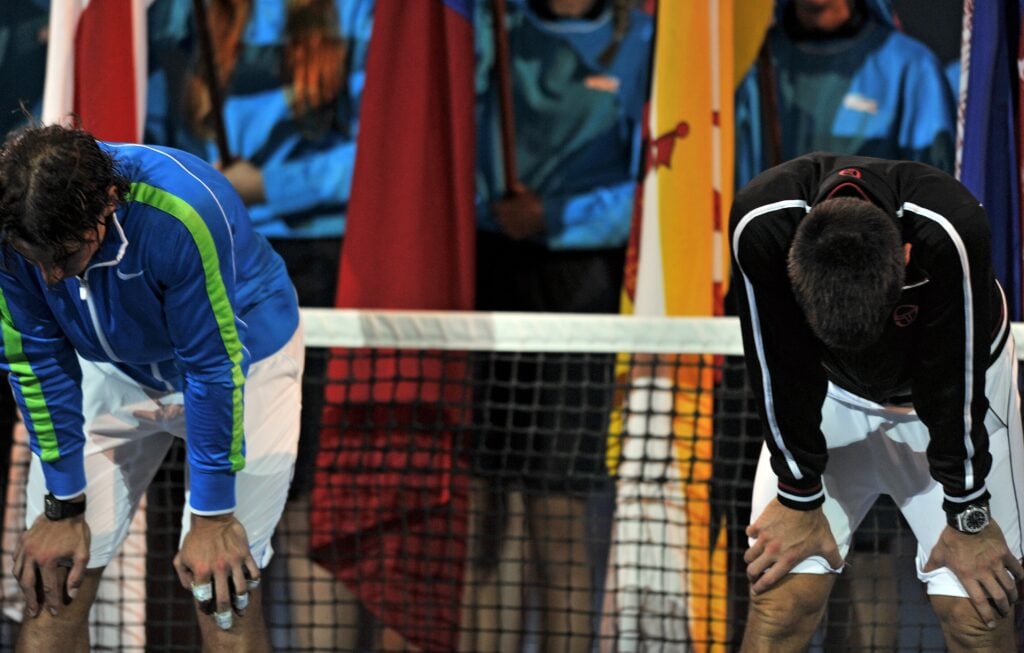
The 2012 Australian Open final between Djokovic and Rafael Nadal remains the longest Grand Slam final in history. The match, won by Djokovic in five sets, lasted five hours and 53 minutes and is considered to be one of the greatest matches in tennis history.
Djokovic has gone on to win a record-breaking 10 Australian Open titles. He could add to that total in 2026 and become the outright leader for the most Grand Slam singles titles in tennis history.