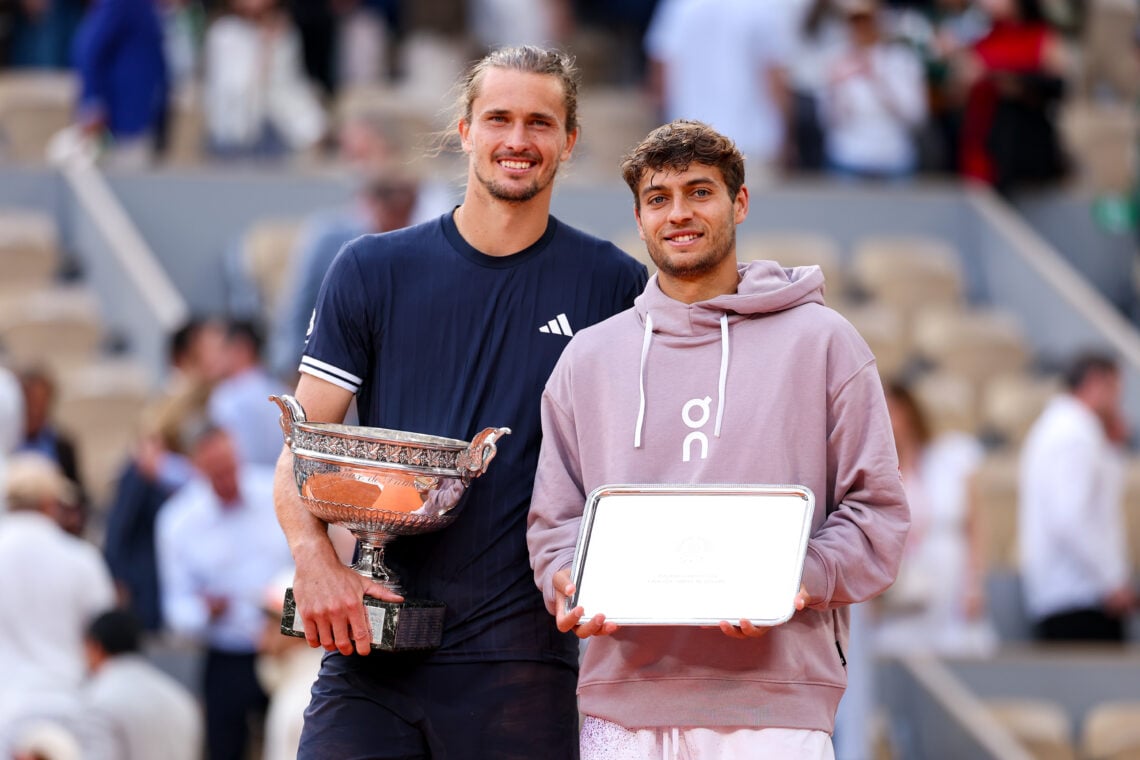


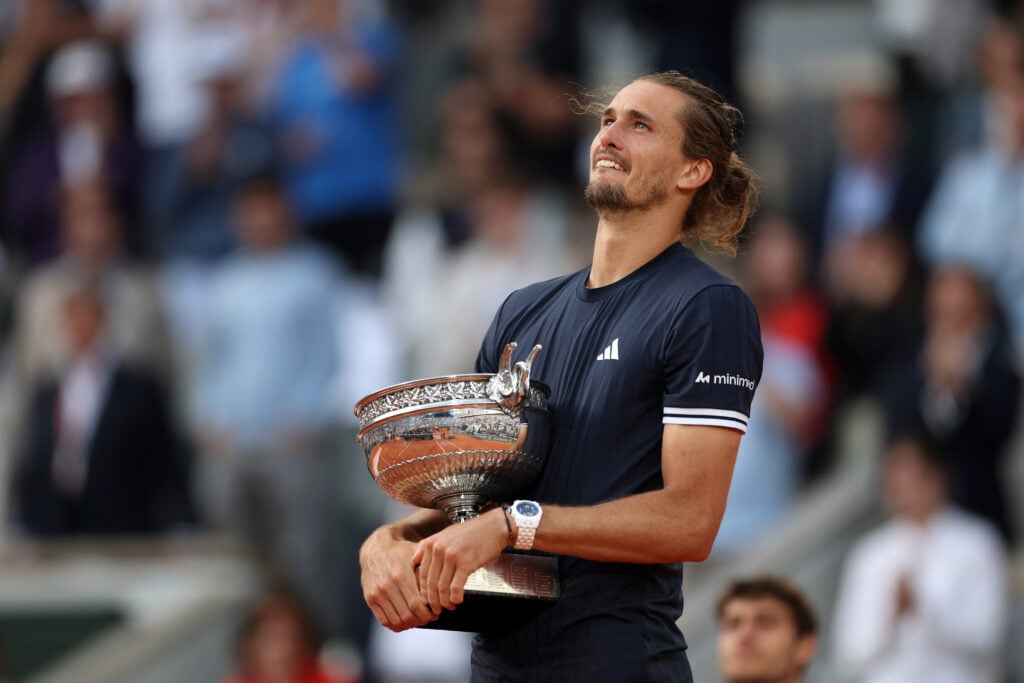
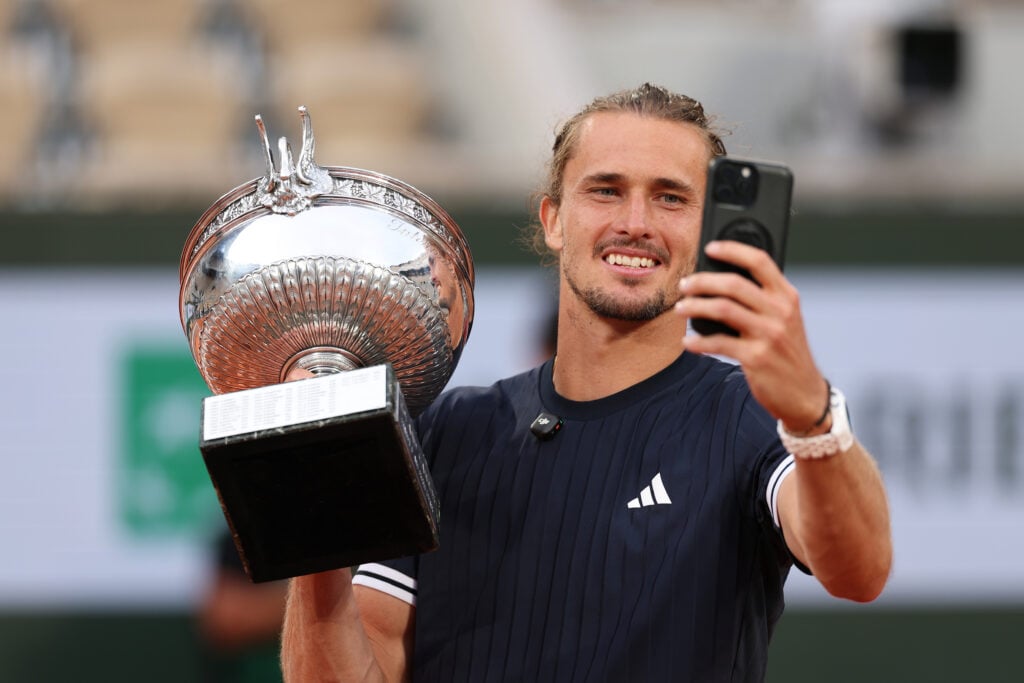
Alexander Zverev finally clinched his first Grand Slam title on Sunday.
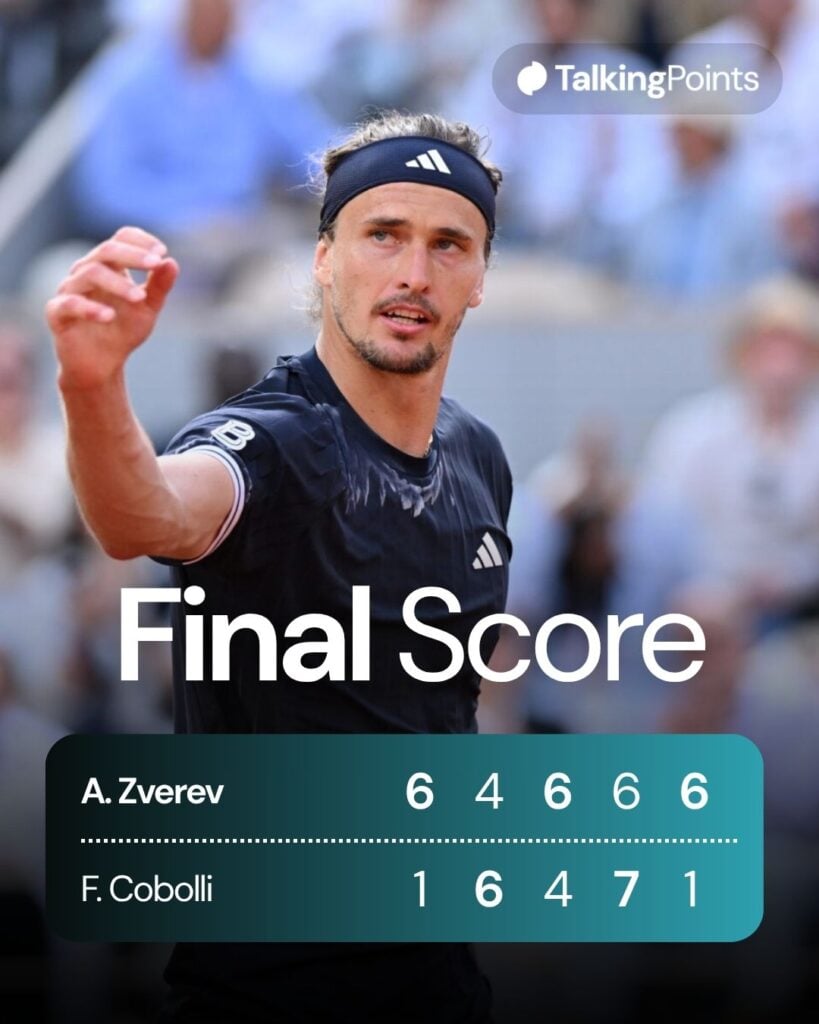
Zverev, who had lost three major finals prior to Sunday’s thriller, defeated 10th seed Flavio Cobolli 6-1, 4-6, 6-4, 6-7, 6-1 on Court Philippe Chatrier.
There were tears in the eyes of the German upon emerging victorious – understandably so after numerous near misses in years gone past.
Who is now the best active ATP player without a Grand Slam title after Alexander Zverev’s French Open victory?
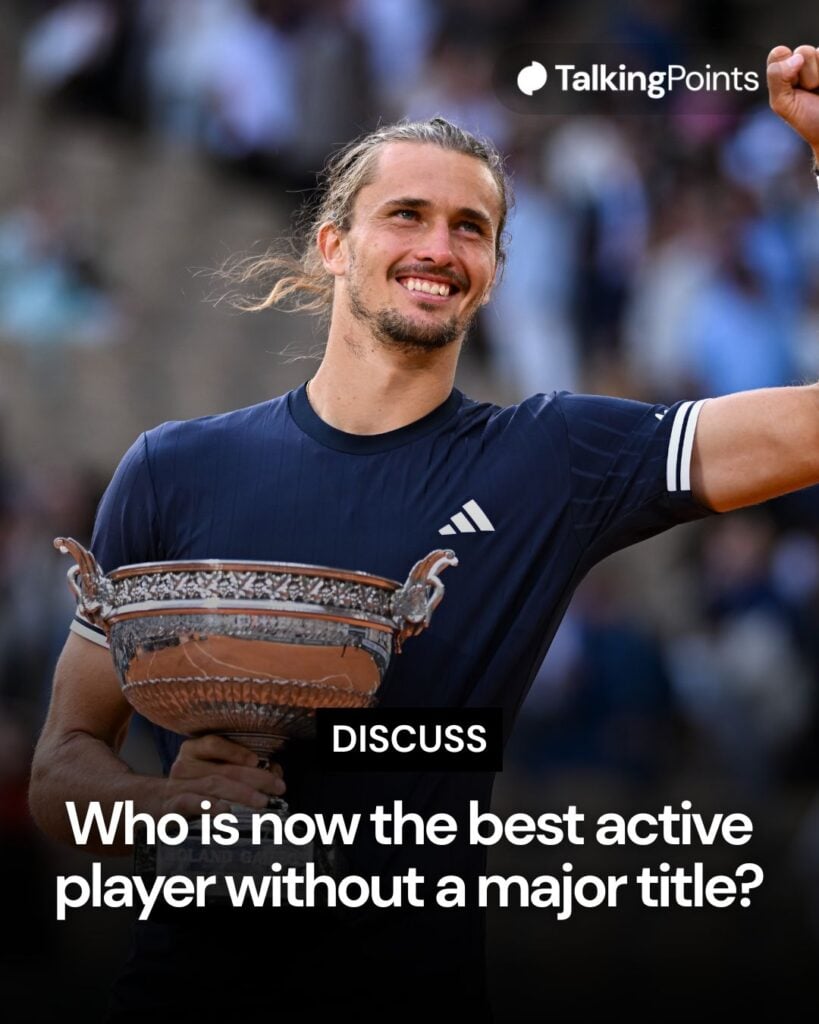
It truly was a back-and-forth affair, with neither player seemingly willing to grab the contest by the scruff of the neck.
Ultimately, it was Zverev who performed at his best when it mattered most; and he will cherish his moment in Paris forever.
However, there is far from consensus of opinion regarding Zverev’s triumph, as demonstrated by Rennae Stubbs’s describing the contest as a ‘choke fest.’
Rennae Stubbs says Alexander Zverev won the French Open final because Flavio Cobolli did not believe he could win
“I have to say that I thought when he lost the fourth set yesterday I thought he was going to struggle in the fifth,” Stubbs, who is coaching Serena Williams, stated on The Rennae Stubbs Podcast.
“The only reason he ended up winning I believe is because Cobolli did not believe he could win.
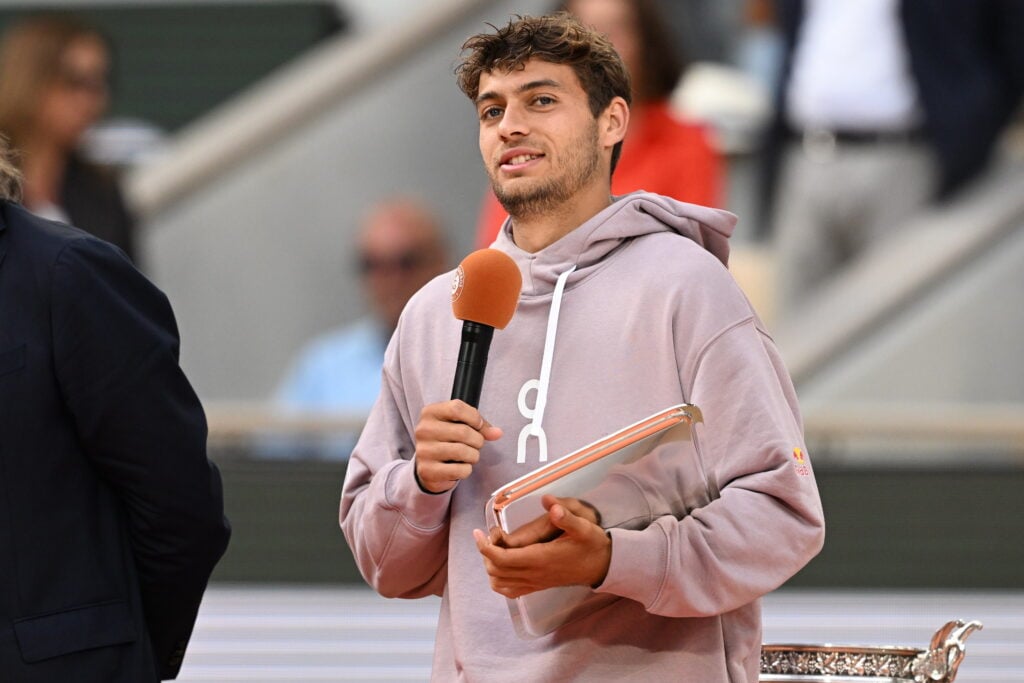
“People will go ‘what are you talking about, he won the fourth set.’ But there is a difference between winning a set and winning two sets and winning a match and a major title.
“The mental circus that is going on in your head as a tennis player, it is hard for me to describe to people.
“I have not won a singles Grand Slam clearly, I have won doubles Grand Slams. But I know the difference between when I walked into a doubles final and I really thought and knew I could win this match.
“And I knew when my subconscious and conscious mind were having an argument about could we win this match.
“I know the difference. I do believe that Cobolli did not really believe he could win. I didn’t say that he didn’t think he could play well, but there is a difference between really believing.
“I still think Sascha didn’t know if he could win or not either. I just think his experience in those big matches actually got him through this match more than it did Cobolli.
Stubbs then proceeded to express her bewilderment regarding Cobolli’s decision at the end of the fourth set.
Cobolli had clinched a momentum-shifting fourth set – and with Zverev struggling physically, it seemed Cobolli was the most likely to win the title.
However, the Italian decided to step off the court for a break, allowing the German to recover.
“I don’t understand why he [Cobolli] went off the court after winning the fourth set,” Stubbs, Grand Slam champion in doubles, stated.
“It was so obvious Zverev was choking.
“And don’t ‘@’ me on this because when you look at the final and the tennis Alcaraz and Sinner play, this match was very average tennis for a major final for the men’s over the last 20 years, which we have only ever seen the greats play in most of them.
“This was a choke fest,” the Australian star boldly exclaimed. “It was nobody wanting to grab the bull by the horns.

“There was some great tennis played, don’t get me wrong, there was fun points.
“The shot he hit down the line to win the fourth set tiebreak was unbelievable but the point before was like what? There was stuff that was constantly just average.
“And the better average player won. That’s what ended up happening.”
These are certainly strong words from Stubbs. However, they may not be entirely incorrect.
Throughout Sunday’s contest the momentum swung back and forth, with neither player taking full control.
Cobolli’s level dipped significantly on more than one important instance – most notably at the end of the third set, when he hit four consecutive unforced errors to concede the set.
Zverev also did not cover himself in glory, twice squandering significant leads during the match.
How many more Grand Slams does Alexander Zverev win now?
What a final!
How many Grand Slams will Alexander Zverev win?
For Alexander Zverev, Sunday’s contest represented the greatest moment of his tennis career to date.
Now that the German has finally got over the Grand Slam hump, will he start to play more freely?
Too often Zverev has found himself playing passive, defensive tennis in the big moments; hoping that his opponent will make a mistake, rather than taking the initiative.
However, the German’s victory in Paris could benefit his future major title aspirations.
Zverev is certainly capable of playing more aggressive, front-foot tennis; and with the Grand Slam title finally secured, the nervousness in those big moments may very well dissipate.
As a result, one would not be surprised if we see Zverev win one or two more Grand Slam titles before his retirement.