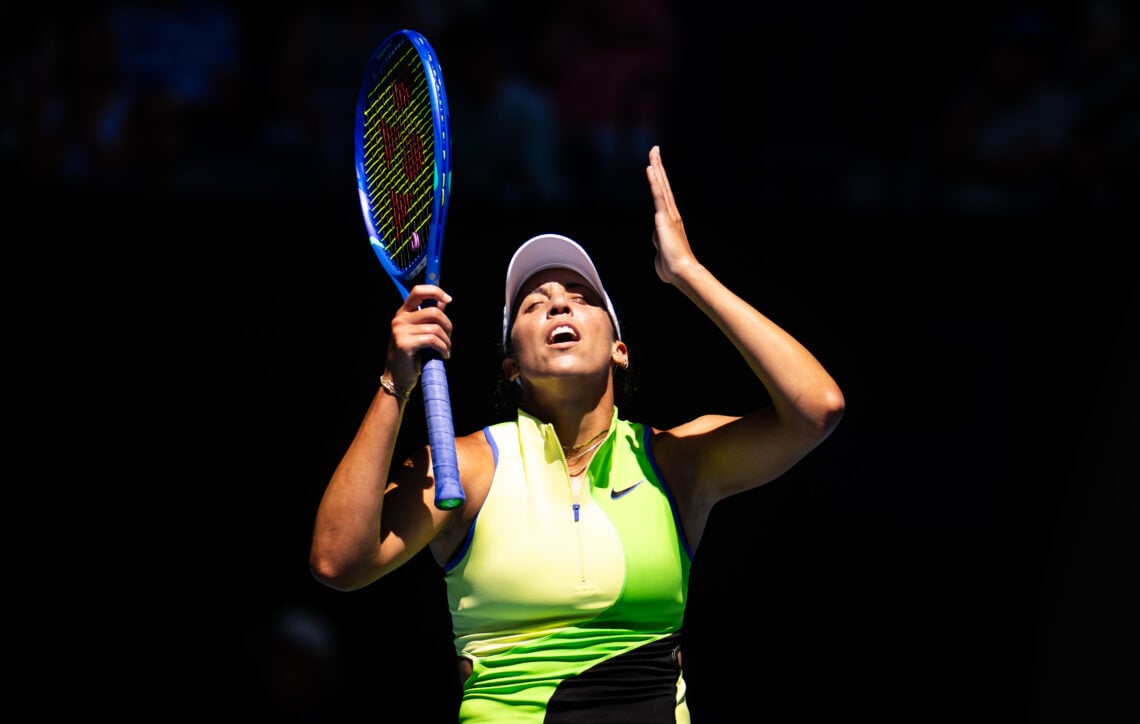


The debate about whether women should play best-of-five-set matches has just intensified following the conclusion of the Australian Open.
Australian Open tournament director Craig Tiley mooted the idea of five-set WTA matches in Melbourne, with women potentially adopting that format from the quarterfinals onwards in 2027.
Reacting to Tiley’s suggestion, 2025 Australian Open champion Madison Keys suggested that the men join the women if such a change were introduced, meaning they would also only play best-of-five from the quarterfinals onwards.
Currently, WTA players play best-of-three set matches throughout the entirety of the Grand Slams, while their ATP counterparts play best-of-five.
Do you think women should play best-of-five set matches?

Madison Key’s suggestion for men’s tennis would make the product weaker
While no suggestions should be ruled out at this early stage, Keys’ argument for men’s tennis would likely weaken the ATP Tour product.
The men are evidently capable of going the distance, and right now best-of-five sets is definitely helping to produce an exciting product.
At the Australian Open, the two men’s semifinals were among the matches of the tournament, both of which went to five sets.
And the Grand Slam really benefitted from those thrillers involving the top four seeds, having been bereft of such matches throughout the majority of the tournament.
The Melbourne event is far from the perfect example of why men should always play five-set matches, but removing that aspect would ultimately be the wrong route to go down.
While there would likely be an increase in early upsets with three-set matches, the best players are currently prevailing, which is ultimately what the Grand Slams will want to achieve.
And even with the joy of a big shock on the biggest stage, the majority of tennis fans also likely want that to be the case.
Most importantly, however, they want to see matches go the distance, particularly if they have paid money to actually attend the match.
It is an intriguing debate to say the least, and one that could perhaps be put to the test at tournaments outside of the Grand Slams, offering a trial run.
Would people watch more or less tennis if the best-of-five format was scrapped?

Why women’s Grand Slams should stay best-of-three sets
While Keys believes women are definitely capable of making the switch from three to five sets, she is against the idea.
And she isn’t the only WTA player to feel that way, with her fellow stars Aryna Sabalenka and Coco Gauff having both previously shared similar thoughts.
Their verdicts really speak volumes, namely because the duo are against the change despite believing they would benefit from longer matches due to their physicality levels.
The action is hugely exciting already, but the energy and intensity levels of the players would undoubtedly be reduced with lengthier matches.
Moreover, Sabalenka raised the issue of a potential increase in injuries with more sets, which is very much a possibility, particularly with the tennis calendar already very busy as it is.
In that light, it would seemingly be much wiser to instead focus on a change to the schedule itself rather than the matches.
Keys’ fellow American Jessica Pegula, who agreed with her compatriot, also brought prize money into the discussion.
She has argued that prize money would need to be increased if the change was implemented, which is an entirely different but hugely significant matter that would need to be added to the complex discussion.