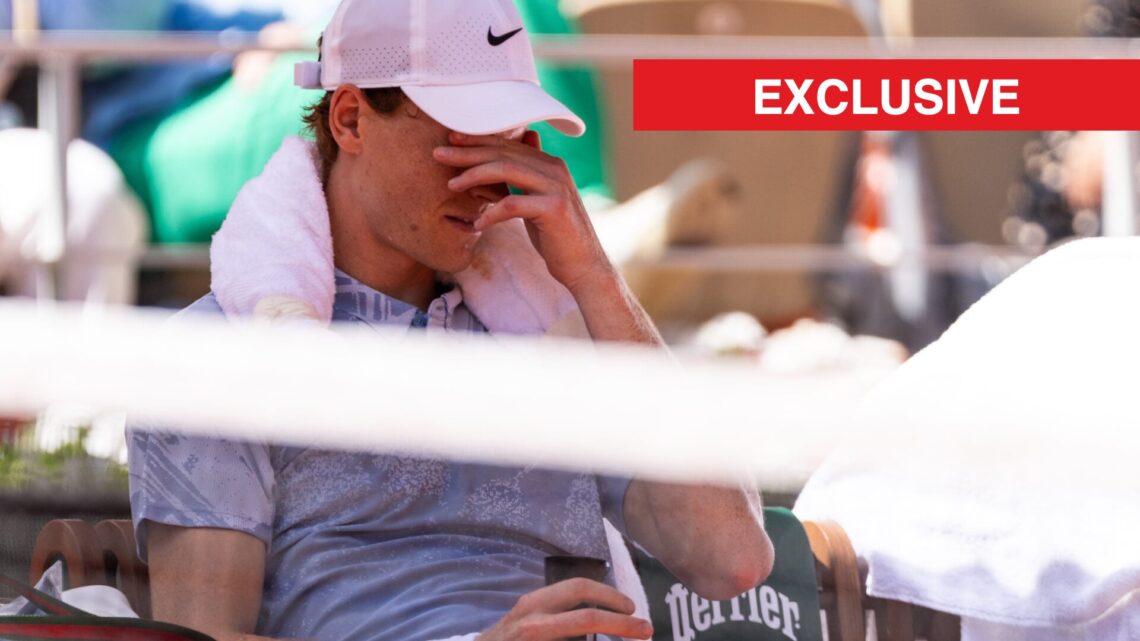

Jannik Sinner’s defeat to Juan Manuel Cerundolo at Roland Garros will surely go down as one of the greatest shocks in tennis history.
The Italian, who had won 30 consecutive contests prior to Thursday’s match, looked to be in full control against the Argentinian while leading 6-2, 6-2, 5-1 on Court Philippe Chatrier.
In a shocking turn of events, Sinner’s body began to fail him.
Where does Jannik Sinner’s defeat to Juan Manuel Cerundolo rank among the most shocking results in tennis history?

Despite receiving medical treatment towards the end of the third set, the Italian simply could not recover sufficiently to close out the match.
Ultimately, he was defeated by Cerundolo, 3-6, 2-6, 7-5, 6-1, 6-1.
In an exclusive interview with Tennishead, Kevin Anderson has offered his thoughts on Sinner’s loss and the controversy surrounding the medical attention he received.
Kevin Anderson reflects on Jannik Sinner’s stunning loss to Juan Manuel Cerundolo
“Surprised. Maybe, probably a little disappointed,” Anderson [pictured below] said of Sinner’s defeat to Cerundolo.
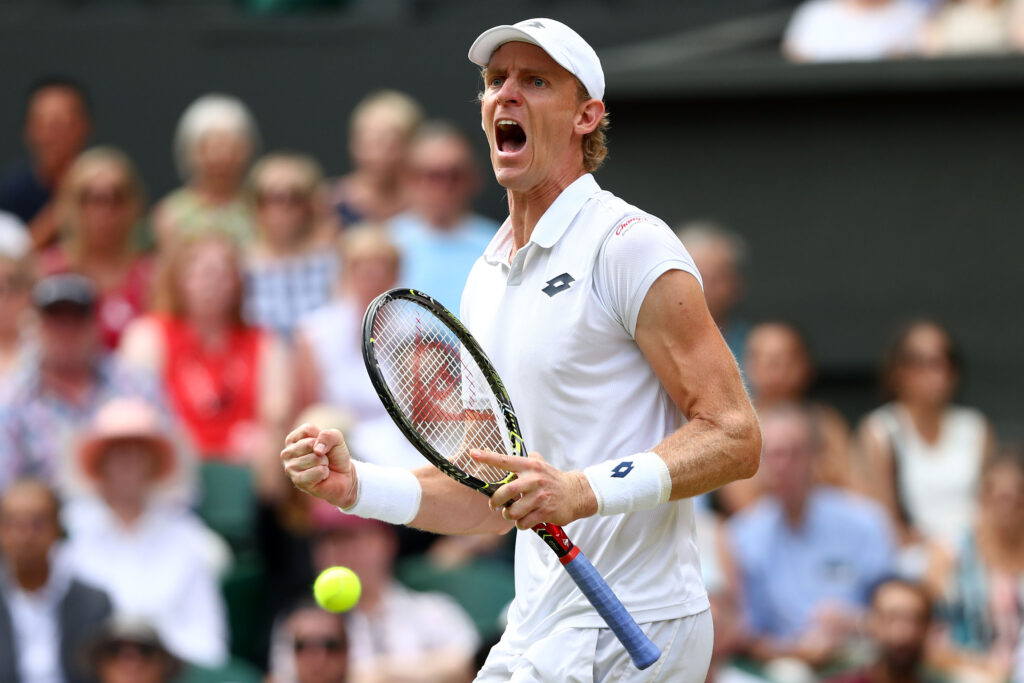
“Obviously it has been great to see his results after his clay season, seeing if he could potentially sweep all the clay events.
“Obviously, I think something must have gone on, but I’m pretty far from that, so I can only speculate.
“Also, it’s kind of exciting. It opens up the field completely. We’ve had the same two people winning for the last almost two and a half years.
“It’s kind of strange… tennis is like that, at least in the last 20 years, we’ve had such a few amount of people winning majors and obviously you’ve still got Djokovic in the draw, so that trend could continue.
“But there’s a potential for a first time winner, which hasn’t happened in quite some time.”
Anderson, a two-time Grand Slam finalist and former world number seven, then offered his opinion on Sinner’s controversial medical timeout midway through the third set.
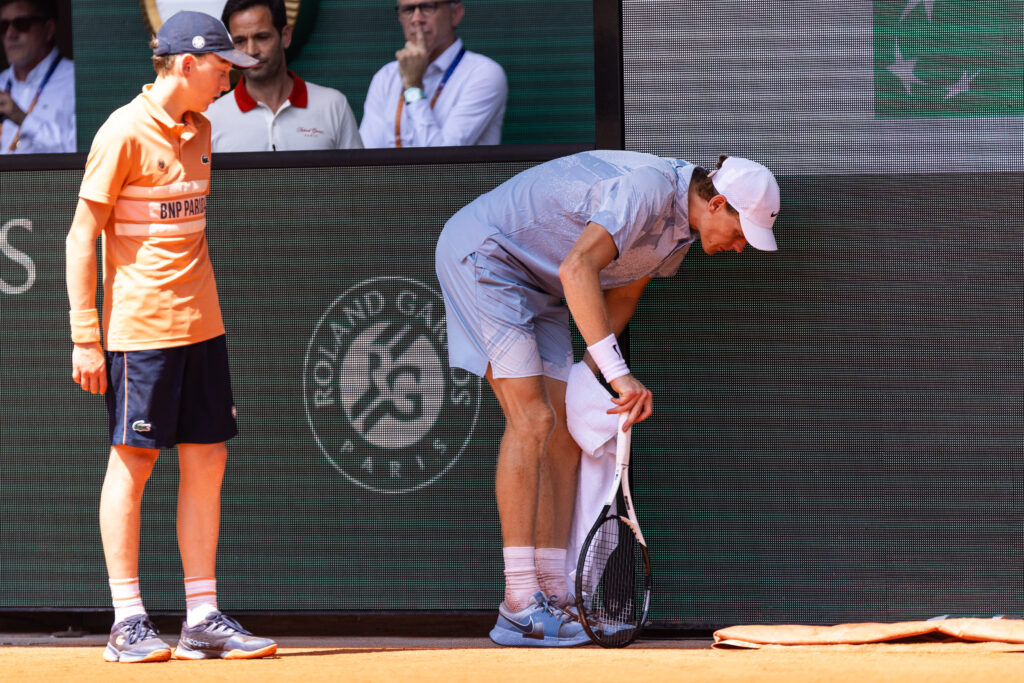
Cerundolo had closed the gap to 5-4, 0-40 when the chair umpire attended to a stricken Sinner.
Following a brief conversation with the umpire, Sinner who appeared to be suffering from cramping, then returned to his chair and told the physio that he felt dizzy and ‘wanted to vomit.’
Sinner then left the court for 10 minutes; much to the dismay of Jim Courier, who claimed the rules were ‘being bent.’
“I mean, it’s a tough one,” Anderson, who achieved a career-high ranking of world number five, remarked.
“I think they’ve got some specific protocols but there are many ways around those protocols, and it’s very tough to implement those and it’s a judgement call.
Jannik Sinner’s 2026 clay-court campaign
- Monte Carlo: Champion [defeated Carlos Alcaraz in the final]
- Madrid: Champion [defeated Alexander Zverev in the final]
- Rome: Champion [defeated Casper Ruud in the final]
- Roland Garros: lost in the second round to Juan Manuel Cerundolo
“So are there going to be players who somehow are going to take advantage of the situation? Yes.
“But there are also going to be times where it’s not and try and give players the benefit of the doubt that in this instance, Sinner really needed a timeout, if he was feeling dizzy or whatever it is.”
The South African, who recently joined the advisory board at INTENNSE, also noted his own efforts to resolve the uncertainty surrounding medical timeout rules while sitting on the ATP’s Player Council.
Anderson served on the ATP Player Council for ten years, from 2012 to 2022, including four years as Vice President and two years as President.
“The other blanket situation is just, you have to take the judgement out of it,” said Anderson.

“When I was on the council, we had conversations like this: depending on if he wants to take that timeout, he’d then forfeit his game and the next game, so it goes on the changeover.
“So there were years of that, because you had players taking medical timeouts before their opponents serve, so we tried to implement a little bit, make some changes.
“At the end of the day, it’s always going to be a little bit challenging to do.
“You’re never going to come up with a golden solution. But there is probably some work to be done, just to make this more clear for people so we avoid stuff that just happens.”
How would you solve Jannik Sinner being allowed medical treatment for cramps?
Another incident…

Kevin Anderson discusses how his experiences on the ATP Player Council will benefit him in his new role
Anderson, the 2019 Arthur Ashe Humanitarian Award recipient, recently joined the Advisory Board at INTENNSE.
The South African has a wealth of experience to draw upon when embarking on this new project, having – as already mentioned – been a member of the ATP Tour’s Player Council for a decade.
| Tournament | Opponent in Final | Score |
| 2011 Johannesburg Open | Somdev Devvarman | 4-6 6-3 6-2 |
| 2012 Delray Beach Open | Marinko Matosevic | 6-4, 7-6 |
| 2015 Winston Salem Open | Pierre-Hugues Herbert | 6-4, 7-5 |
| 2018 New York Open | Sam Querrey | 4–6, 6–3, 7–6 |
| 2018 Vienna Open | Kei Nishikori | 6-3, 7-6 |
| 2019 Pune Open | Ivo Karlovic | 7-6, 6-7, 7-6 |
| 2021 Newport Open | Jenson Brooksby | 7-6, 6-4 |
When asked about how this experience may aid his future endeavours with INTENNSE, Anderson said: “Obviously time will tell. I always feel it is good to have experience in different matters.
“Having a deep experience of the tennis world beyond the courts and just winning tennis matches has certainly given me a lot of experience between dealing with a lot of issues, and the politics and understanding tennis at a deeper level.
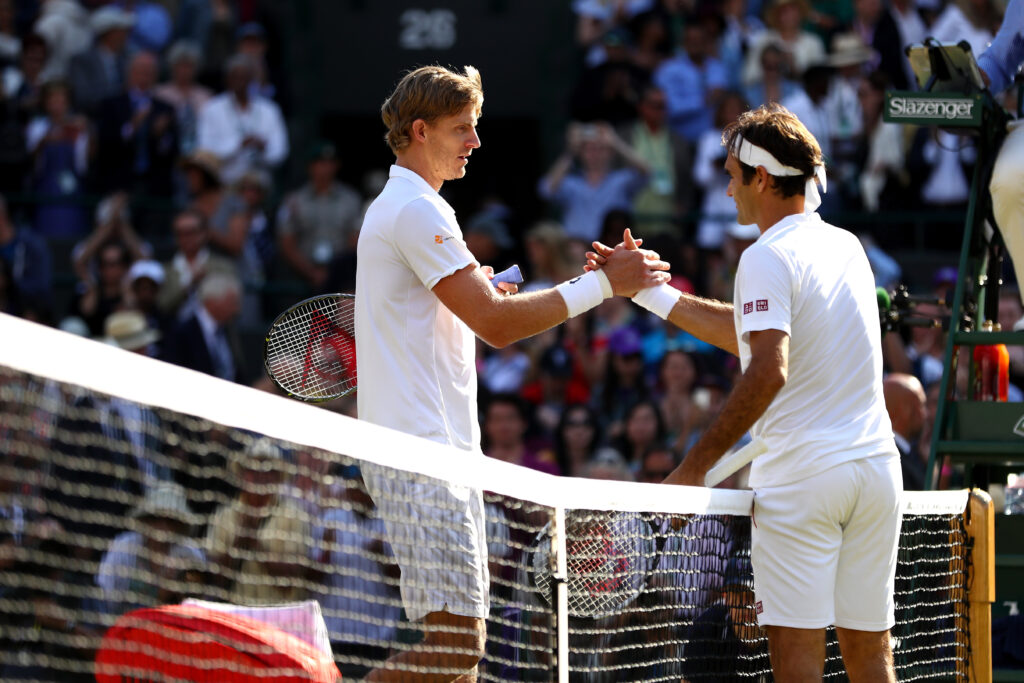
“Obviously, INTENNSE’s mission and its format and its vision is quite different,” the South African, one of the few men to defeat Roger Federer at Wimbledon, added.
“For me, it’s definitely… I’m excited by the opportunity to understand and learn the environment and kind of see the direction and how to receive – we’re pretty early on into the whole endeavour so it’s kind of new for everybody.
“I think there is a lot of hope. I think there is a lot of great avenues that INTENNSE have identified and opportunities.
“But of course, just being involved with tennis my whole life, pretty much every level; and even off the court as you kind of mentioned, hopefully will give me some good context and background to help make better decisions.”