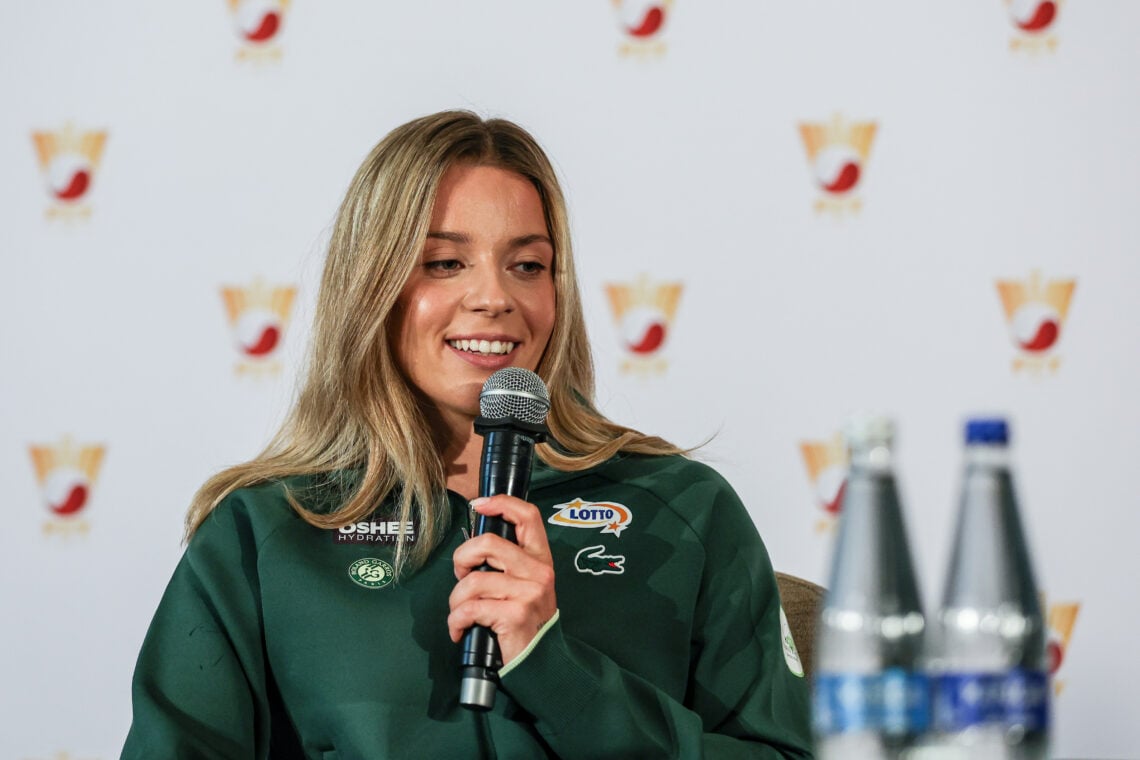


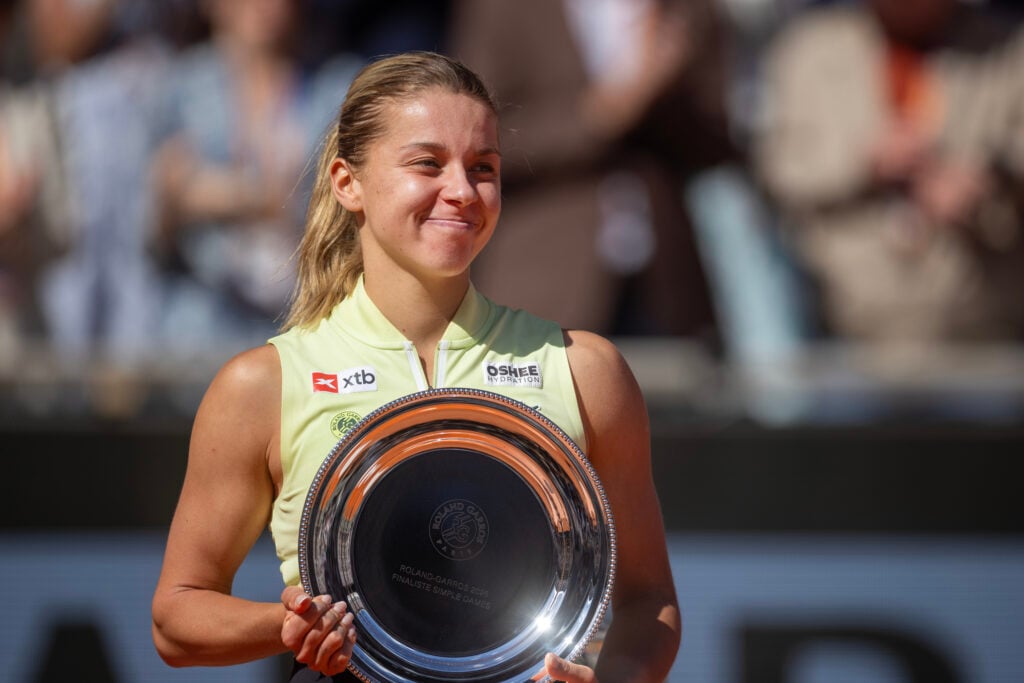
Maja Chwalinska became only the second qualifier in tennis history to reach a Grand Slam final when she defeated Diana Shnaider in the Roland Garros semi-finals earlier this month.
Although Chwalinska went on to lose the final, she captured the hearts of tennis fans worldwide.
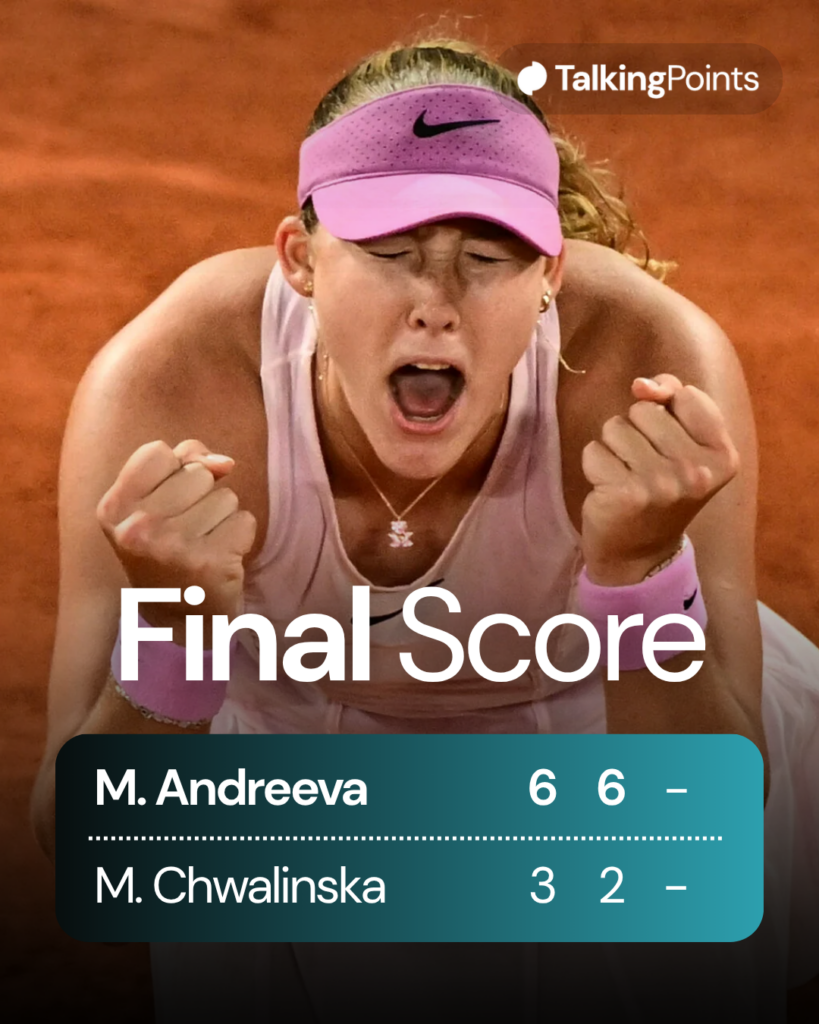
How many Grand Slams does Mirra Andreeva win in her career? 🏆
Following her performance in Paris, there were question marks concerning Chwalinska’s ability to play in the main draw of Wimbledon.
When the Wimbledon cutoff date passed last month [six weeks prior to the event], Chwalinska was ranked 116th on the WTA Tour.
Consequently, she was set to play in Wimbledon qualifying.
Any fears regarding Chwalinska’s Wimbledon status were allayed on Tuesday when tournament organisers awarded the Polish star a main draw wildcard.
However, the whole debacle raises concerns regarding the entry list process for Grand Slam events.
Danielle Collins says Grand Slams should reduce the cutoff window for their entry lists
The cutoff date for Grand Slam entry lists occur around six weeks prior to a tournament’s start date.
Therefore, players who perform well in the six weeks prior to a major tournament are often forced to qualify for the main draw – despite being ranked within the main draw spots immediately before the event.
Fortunately for Maja Chwalinska, she has not had to deal with that potential scenario.
In fact, she is set to be a seeded player for Wimbledon, which will begin on June 29.
“The wildcard with the seed next to her, and that’s something you don’t see too often,” Sam Querrey, the former world number nine, said on the Tennis Channel. “And I think because she made the finals of Roland Garros, I think she’s into the main draw.
“I think if she lost in the semis (like) Lois Boisson the year before – she did not get a wildcard.
“But for Chwalinska, I think it’s well deserved and I’m excited to see how her game translates on the grass.”
Last year, French star Lois Boisson reached the semi-finals of Roland Garros, subsequently rising from world number 296, to 65.
Unlike Chwalinska, Boisson did not receive a Wimbledon wildcard and ended up losing in the first round of qualifying.
Wimbledon Ladies Singles wildcards
- Maja Chwalinska
- Harriet Dart
- Alicia Dudeney
- Hannah Klugman
- Mika Stojsavljevic
- Katie Swan
- Mimi Xu
- To be announced
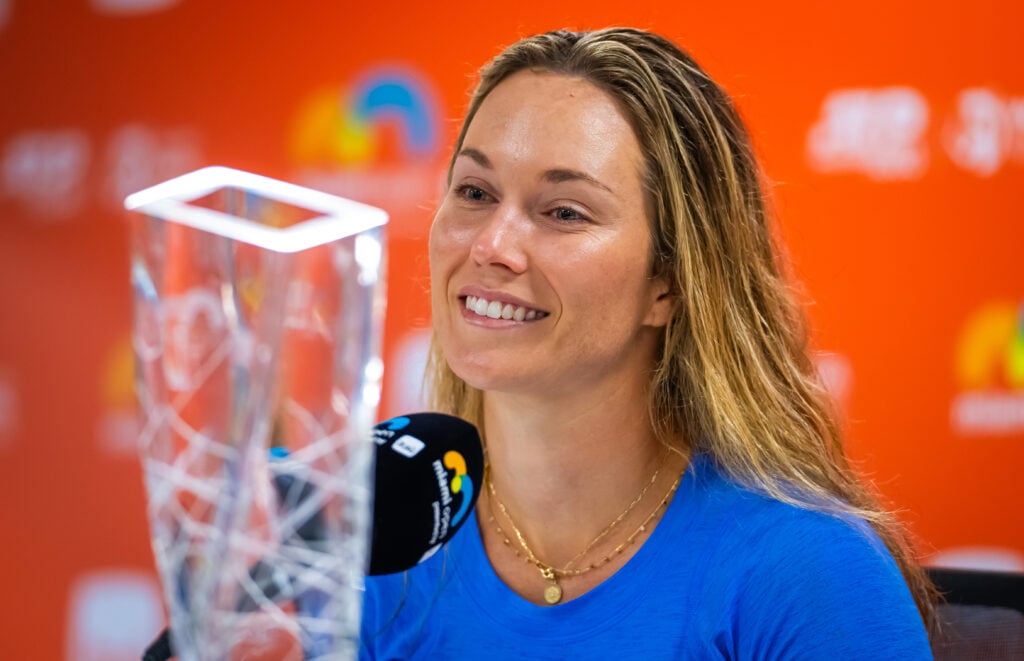
Danielle Collins would like to see the Grand Slam cutoff dates altered in order to prevent situations like Boisson’s and Chwalinska’s from occurring again in the future.
“So well deserved [Chwalinska], and like we talked about yesterday, we all kind of agree that if you make the final of a grand slam and you are not on that entry list, you should automatically get some kind of direct acceptance into the tournament.
“I almost think that the cutoffs for the entry list between French open and Wimbledon it should be three weeks instead of six.”
“Because these are the only majors where it’s a tight little window, right?” Querrey then added. “Where you can have that run in Roland Garros but you can have the cutoff for the ranking already happened prior to that.
“We don’t have this problem with Australia, Roland Garros and the US Open.”
“So well deserved,” Collins reiterated. “And I would have hated to see her go through qualifying after what she did and how she’s proved herself.”
Danielle Collins is correct
Frankly, it is somewhat ridiculous that the system in place has not already been changed.
Six weeks is far too long of a window to be finalising rankings prior to a Grand Slam – particularly between Roland Garros and Wimbledon where there is less than a month between the two events.
Simply put, players who have performed superbly in the lead-up to a Grand Slam event should be participating in the main draw, not hoping for a wildcard.
If you were in charge of tennis, what is the first rule you would change?

For two consecutive years this issue has occurred [Boisson and Chwalinska]. Change needs to be enacted; otherwise this situation will continue to occur.