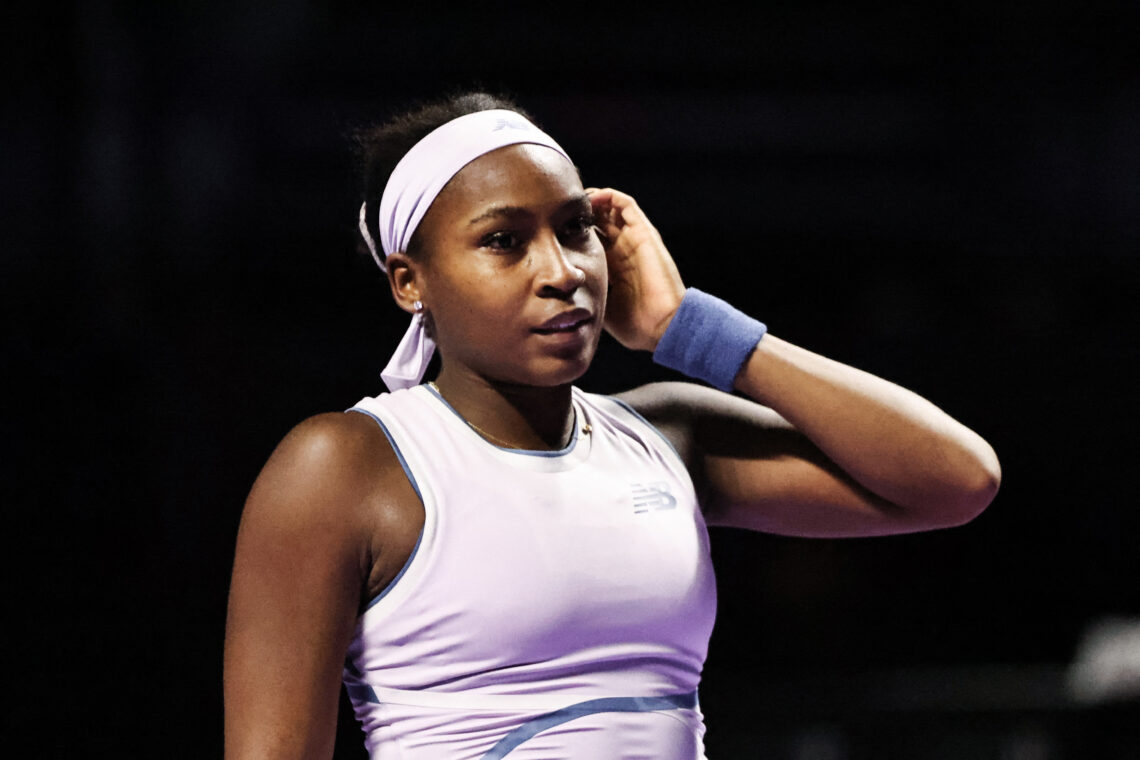


Coco Gauff bounced back from a difficult loss to Jessica Pegula on Sunday to defeat Jasmine Paolini in her very next match.
The 21-year-old, who served 17 double faults and hit 45 unforced errors off the forehand against Pegula, rose to the occasion against Paolini, sealing a 6-3, 6-2 win over the Italian.
Gauff was much improved against Paolini, serving only three double faults and winning 15 of her 20 second serve points.
The American will face Aryna Sabalenka in her final WTA Finals round robin match, and she will most likely need to win the contest to advance.
Gauff proved her doubters wrong on Tuesday, and she will hope to continue that trend when she faces Sabalenka, who defeated Paolini in her opening WTA Finals match.
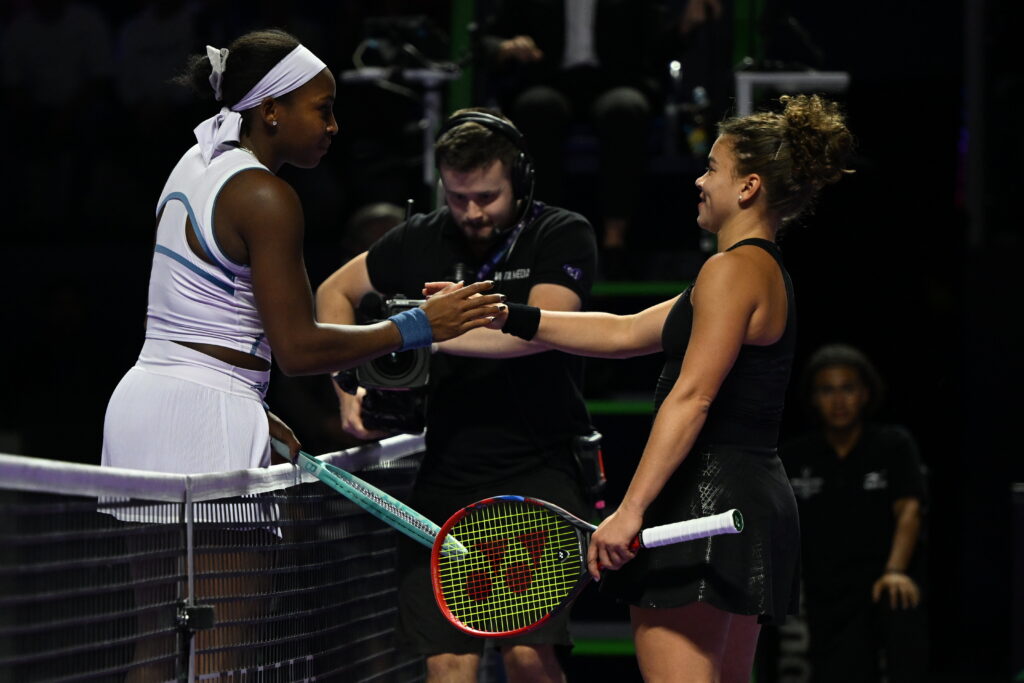
As a result of her victory on Tuesday, Gauff has formed an elite group of American players.
Coco Gauff has won 30 or more hard-court matches for three consecutive seasons
As per OptaAce, Coco Gauff is now the third American in the Open Era to win 30 or more WTA-level wins on hard courts for three or more consecutive calendar years. Gauff has achieved this total for three years straight from 2023 to 2025.
Serena Williams, a 23-time Grand Slam singles champion, also achieved the feat from 2013 to 2015.
Lindsay Davenport, the 1999 Wimbledon Ladies Singles champion, went one better than Gauff and Williams, accomplishing the feat for four years consecutively – from 1997 to 2001.
The American is attempting to repeat in Riyadh following her successful campaign at the 2024 WTA Finals.
Last year, Gauff defeated Iga Swiatek and Aryna Sabalenka on her way to the final, before clinching the title against Qinwen Zheng: 3-6, 6-4, 7-6.
Laura Robson analyses Gauff’s performance
After Gauff clinched the first set against Paolini, former Wimbledon junior champion Laura Robson was asked a pertinent question by her co-commentator.
During Sky Sports’ coverage, Jonathan Overend said: “I just wonder about the double faults in succession, which is something we see quite a lot with Coco, any tips that you could offer.
“If you were sitting down, having a talk with her, having a really open, honest conversation about that, how can you just try and eliminate the nerves and the worries ahead of that second attempt.”
While studying a graphic showcasing Gauff’s ball toss on second serves during the first set, Robson said: “You see the second serve contact points, it’s varying a lot less than against Pegula.
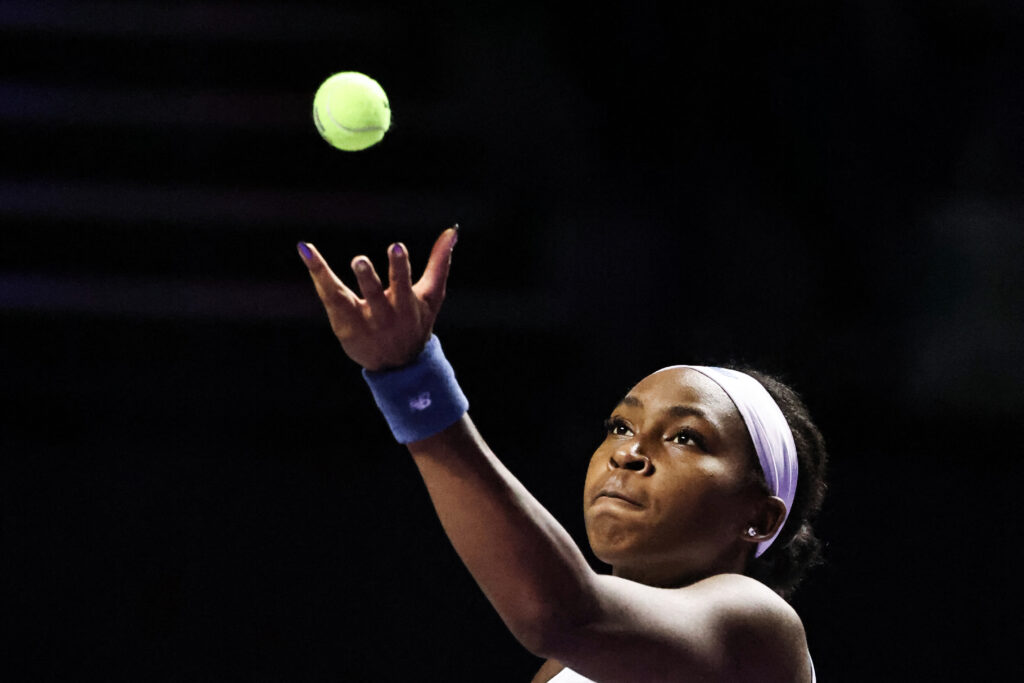
“Maybe a little too much still on that deuce side where the ball toss pulls off to the side. She really only has the option to come around it and slice it.
“But yeah, really nice on the ad side to see some consistency there so I think sometimes, when you’re double faulting, you try and overcorrect straight away on the next point and that’s when those back-to-back double faults can creep in, because each time you step up to the line, you’re trying to do something different and the idea is that your serve should be the same every time you’re up at the baseline.
“So yeah, just some consistency, and this is something in practice she’d do time and time and time again. But it’s one thing to do it on the practice court, it’s much, much tougher to do it on a match court.”
After the match, Robson praised Gauff’s ability to rise to the occasion.
She said: “Well, just a really solid performance. She’s almost her toughest critic at times isn’t she?
“You just hope that she’s able to appreciate how well she’s come out and played today, given everything else, and we’re always looking at the double faults and we’re always looking at the serve.
“And yet, when it counts the most, she just gets it done.”
For all the criticism Gauff receives, she remains one of the most impressive players on the Tour when things aren’t going her way. Her resilience is unmatched, and this is a trait that will serve her well long into the future.