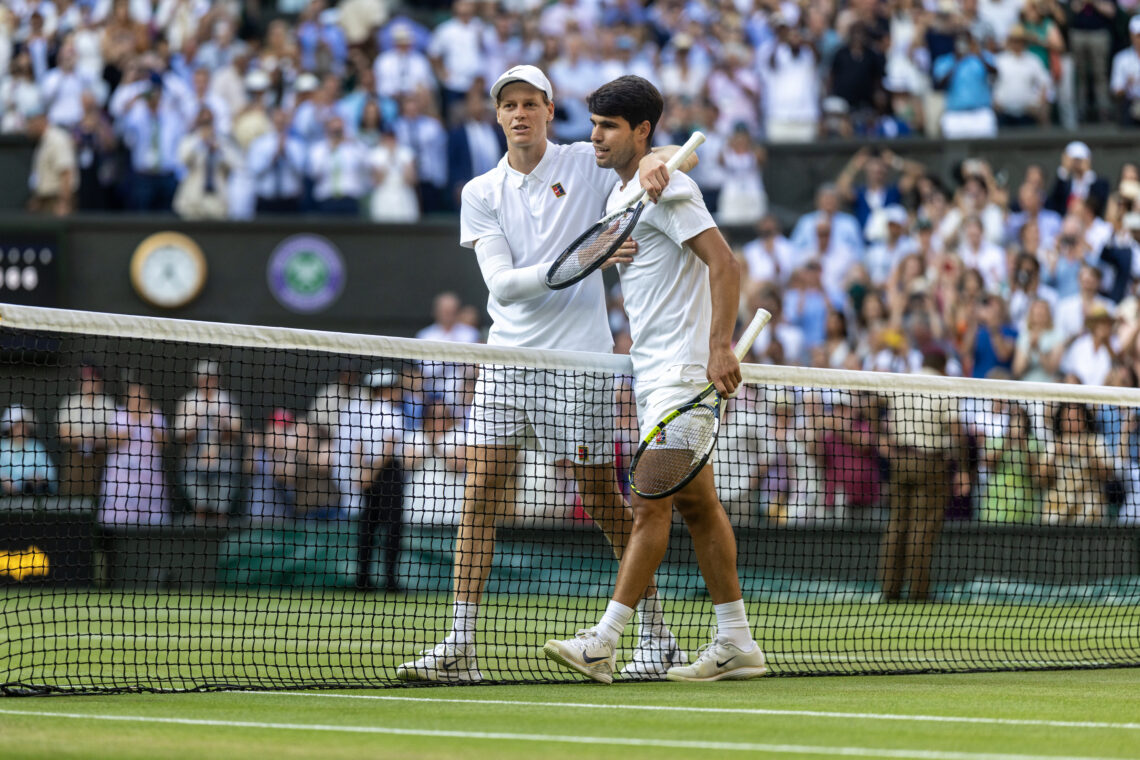


Carlos Alcaraz will contest a seventh straight final later today, as he faces Jannik Sinner in yet another iteration of this ever-evolving rivalry.
This will mark the third meeting we have been treated to between these two fierce competitors this year, with all of their last four matches having come in the final.
That should come as no surprise though, given they are quite comfortably the top two players in the world. The ATP rankings suitably reflect that.
However, despite the Spaniard having the edge in their head-to-head, it is Jannik Sinner who boasts the most recent victory, dethroning Carlos Alcaraz in the Wimbledon final.
And whilst this will have been a huge blow for the five-time Grand Slam champion, he actually has learned exactly what he needs to do to beat Sinner.
Why Carlos Alcaraz lost the Wimbledon final
There are naturally a handful of reasons why Alcaraz lost the Wimbledon final, but chief among them was Sinner’s superiority.
He was inspired, and despite losing the opening set, remained as ruthless as ever when given a chance.
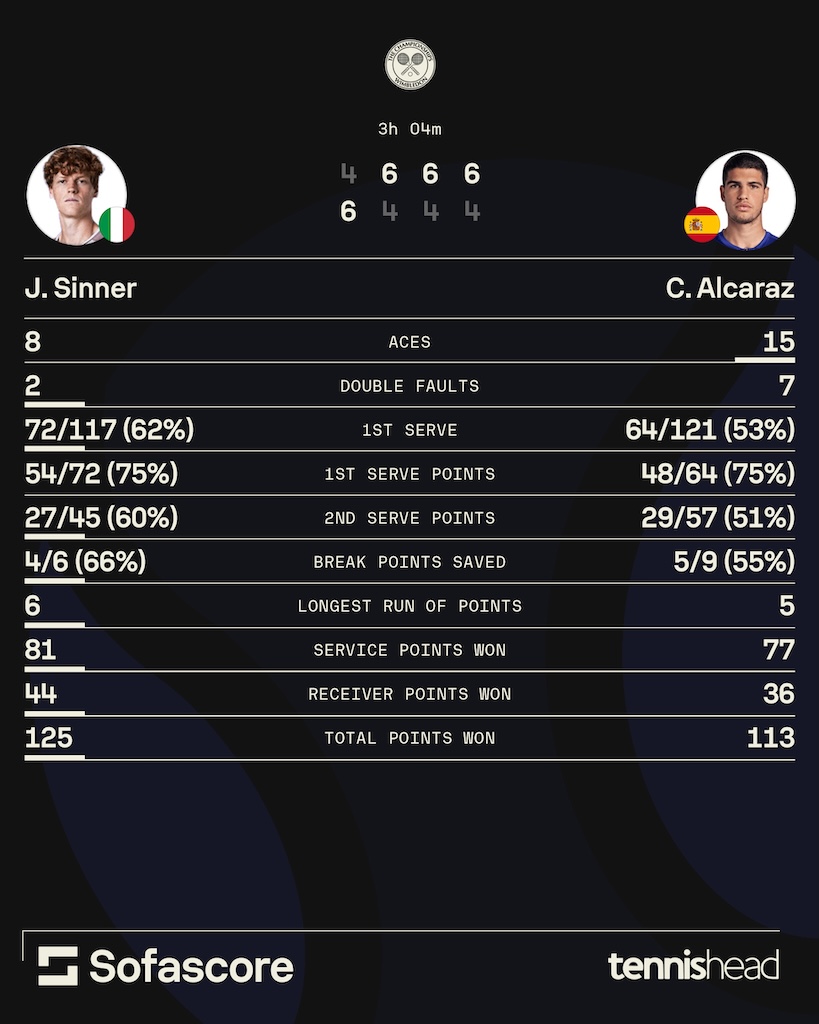
Alcaraz, meanwhile, perhaps lacked that lethal touch, with two crucial statistics that emerged in the aftermath that let him down the most.
Getting in just 53% of his first serve marked a really poor serving day for the Spaniard, and as such, it gave his opponent countless chances to attack his second serve with ferocity.
It felt like, if his first serve didn’t go in, his chances of losing the point dropped dramatically.
As such, he won just 51% of points on his second serve, which proved pivotal.
Other than that, he competed well from the baseline throughout, matching this supreme ball-striker blow for blow.
At the Cincinnati Open later today, he cannot allow his serve to let him down again.
Alcaraz recently revealed how long it took him to get over his Wimbledon final defeat, with this ongoing event his first since that match.
Carlos Alcaraz should feel confident of beating Jannik Sinner
Fortunately, there have been signs that Alcaraz’s serve has been on the mend, although it does fluctuate rather wildly.
Against Alexander Zverev, his first serve percentage fell to just 53%, but against Andrey Rublev it sat at a respectable 62%.
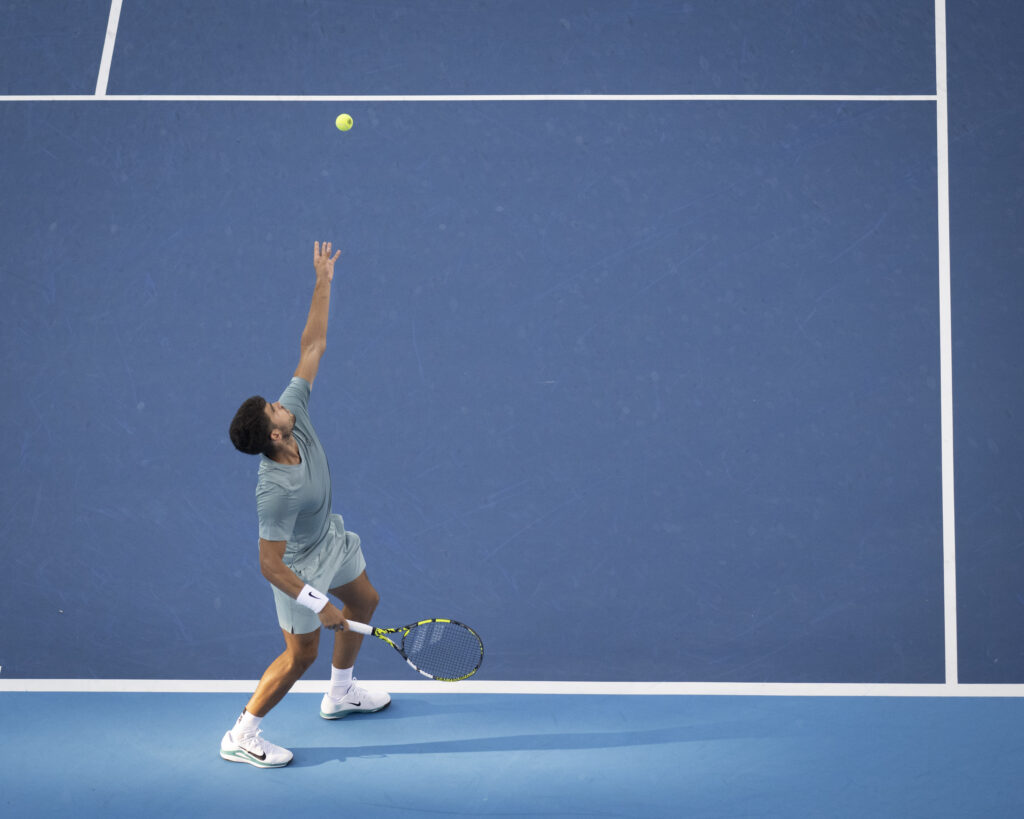
The round before that, against Luca Nardi, it was even higher at 65%.
He can quite clearly find consistency in the serve, but it just seems to shift from match to match.
In what marks yet another clash between these two young titans of the sport, set to compete for another of tennis’ elite honours, there’s no better time for Alcaraz to lock in and ensure that his serve does not once again prove to be his undoing against a player who will take any advantage given.