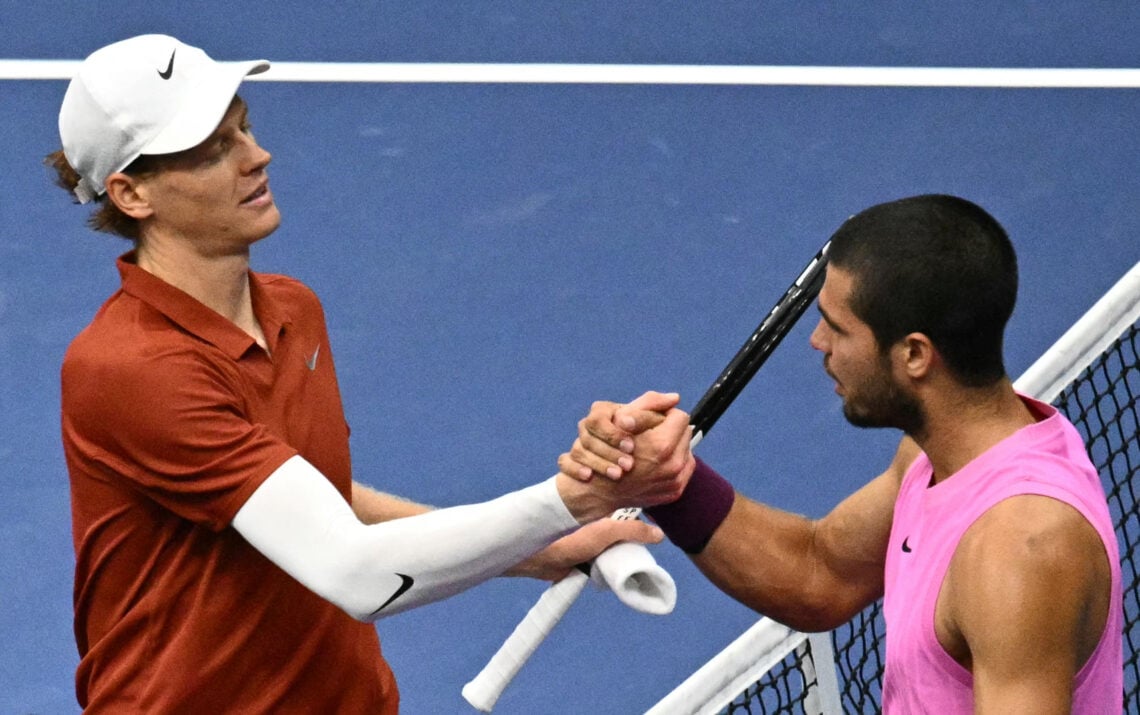


British tennis professional Liam Broady noticed an ‘extinct’ style of play coming to the fore during Taylor Fritz’s Shanghai Open contest against Giovanni Mpetshi Perricard.
During the contest, won by the Frenchman in straight sets, Broady noted Mpetshi Perricard’s use of serve and volley as a tactic against the American.
This specific tactic was widely utilised during the 1980s and 1990s by the likes of Pat Cash, Pete Sampras and Tim Henman.
However, the style of play has since fallen out of fashion.
Broady has sought to explain why, while suggesting that a change to tennis’ infrastructure could result in a better spectacle for fans.
Liam Broady suggests faster court surfaces would make tennis more exciting for fans
Broady was commentating for Sky Sports alongside Jonathan Overend when recent comments made by Roger Federer arose in conversation.
Recently, Federer suggested tournament directors have been slowing down court speeds to the benefit of Carlos Alcaraz and Jannik Sinner.

This was recently echoed by Alexander Zverev, who vocalised a similar sentiment during the Shanghai Masters.
Broady began a discussion regarding the topic, noting an ‘extinction of net rushers’ due to slower court speeds.
Broady said: “I think Federer actually did an interview this week, was it last week? Talking about the speed of the surfaces and how it’s changed over the years. It’s sort of led to the extinction of the net rushers.
Co-commentator Jonathan Overend chimed in: “I think faster surfaces are good. I mean, in such a skillful sport as this, it really tests reaction times doesn’t it, and in theory should make the very best players stand out even more.
Broady replied: “Yeah, I’d love to see a faster surface so we can see a bigger variety of game styles.
“I remember we used to see Pete Sampras losing to guys at Roland Garros that maybe we wouldn’t have really heard of on the main tour. And then ‘pistol’ being so dominant on the grass, hard court events.”
Overend then followed on: “These Asian tournaments have always been a little bit quicker.”
Broady responded: “Yeah, they used to be really quick didn’t they?
Overend added: You head to Paris and that would be the quickest of them all. Indoors there at Bercy. It will be very interesting to see how it plays at the new venue this year as they move to [Editor’s note – tournament has moved to Paris La Défense Arena.]
“Not just the court speed of course which makes players reluctant to come forward. The string technology enabling the returners to hit with so much spin.
“And that, of course, makes those volleys harder for the players who are at the net. The ball’s dipping down earlier.
“Generally speaking, I think if we had faster surfaces we’d encourage attacking play, which in theory would keep the rallies shorter. It would speed up the game and might actually cause fewer injuries long-term.
Broady went on: “And it made it so exciting didn’t it?
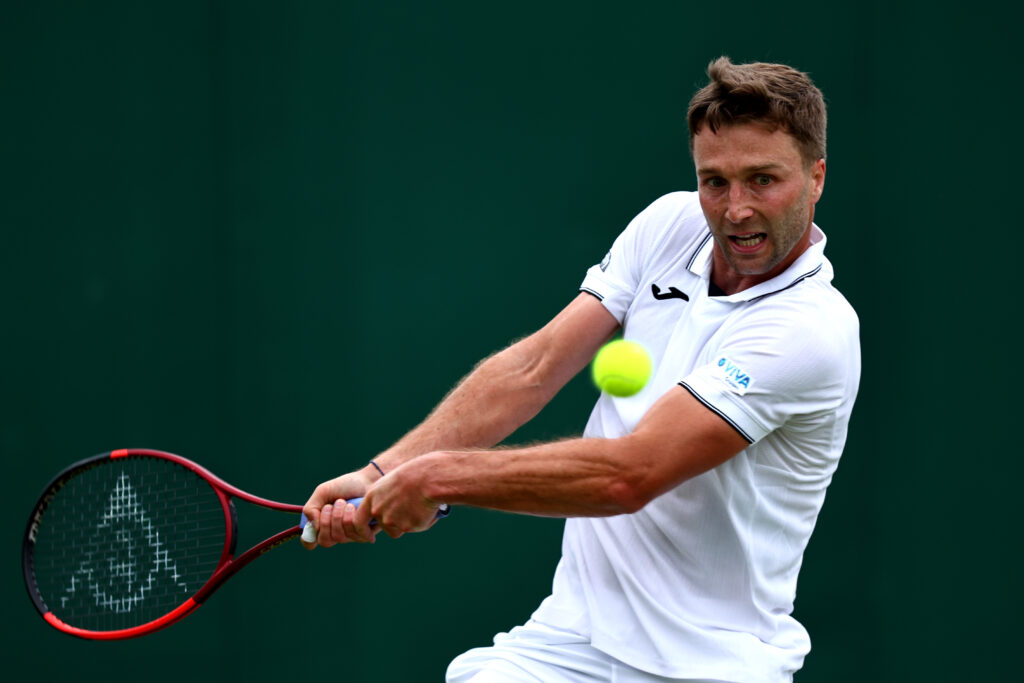
“Thinking of the likes of Tim Henman the way he used to play, it was so brave and aggressive, and you really showcase a player’s athleticism at the net, which you really can’t from the baseline.”
Overend continued: It’s a different kind of athleticism I suppose.
Broady concluded the discussion, saying: “Yeah and the touch, and I don’t know, I find it so much more satisfying watching a good volleyer than watching a good baseliner. I don’t know what it is.”
What did Roger Federer say about court speeds?
Roger Federer’s recent comments regarding court speeds certainly caused a stir within tennis circles.
The Swiss legend spoke on ‘Served with Andy Roddick’ during the Laver Cup, revealing a discussion he had with American star Reilly Opelka.
Federer said: “I just had this conversation this morning with Reilly Opelka. I told him it’s not okay – and I fault myself because I was part of the decision making for the court surface speed here – but it can’t be that he’s kick serving on the ad side, indoors against Casper Ruud.
“Casper Ruud actually can go back, even has that option indoors to go return Reilly’s serve, which is probably arguably one of the best serves in the game right now.
“And he returns it from hip height and just hits a cross-court passing shot winner on the return on break point.
“I feel like it should be a little bit more difficult to be able to do that and I think that’s why we, the tournament directors, need to fix it. We need to have not only fast courts.
“What we would want to see is [Carlos] Alcaraz or [Jannik] Sinner figure it out on lightning-fast, then have the same match on super slow and see how that matches up.
“But that’s how the ranking points used to be, remember? Back in the day only 12 tournaments counted, so everybody would play on their favourite surface and then they would sometimes meet, and those were the best matches when you had the attacker against the retriever and now everybody plays similar because the tournament directors have allowed, with the ball speed and the court speed, that every week is basically the same.
“That’s why you can just go from winning French, Wimbledon, US Open and just play the same way.”
Federer later added: “I understand the safety net that tournament directors see in making the surface slower, is for the weaker player he has to hit extra amazing shots to beat Sinner whereas if it’s quick, he can only maybe blast a few, at the right time, and it gets past.
“So that’s what the tournament directors [think], ‘I kind of like Sinner and Alcaraz in the finals, you know, it kind of works for the game’.”
Roddick replied: His fellow former world number one Andy Roddick replied: “That’s the thing, that’s the entire thing. That basically, you give a surface where it kind of exposes Carlos’s paintbrush even more, where he has time and he can play all the variety of shots. He’s going to win on slow, he’s going to win on fast.”
Federer then concluded the conversation, saying: “But I think we’ll get there again, I think we’ll figure it out.”