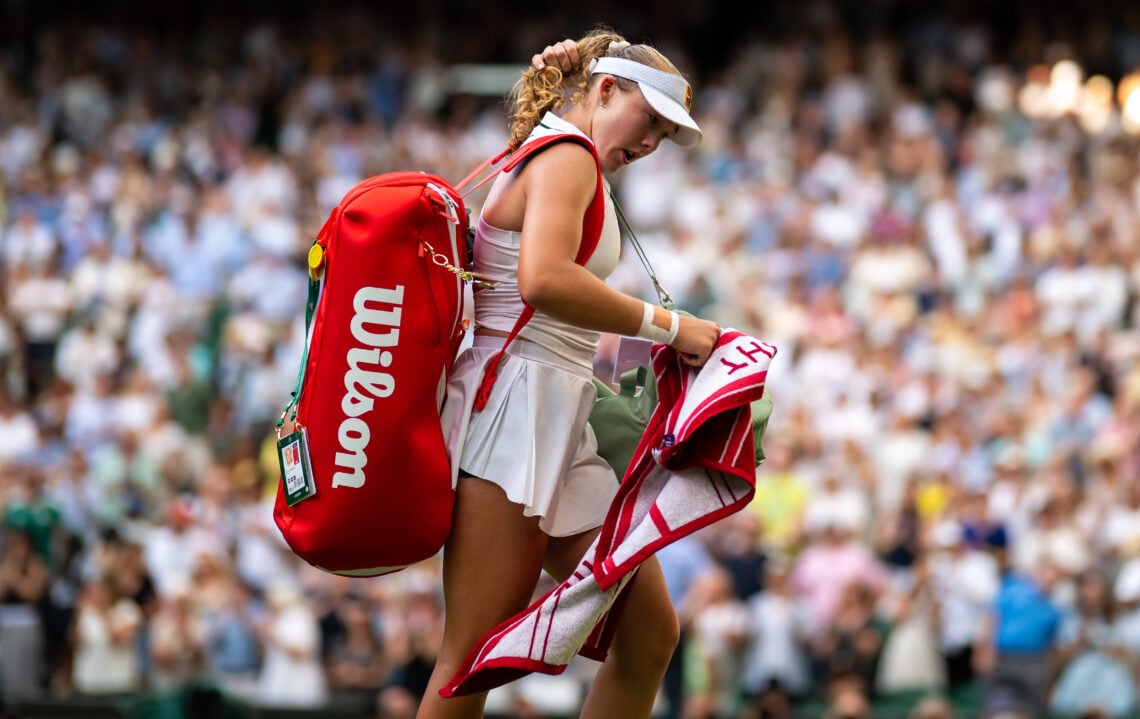


For all her undeniable technical talents, handling her emotions is not one of Mirra Andreeva’s strong suits.
That being said, at 19 years of age, she can be somewhat excused for this.
Tennis is a highly pressurised sport that demands so much, both physically and mentally, from its top players. It’s no surprise that we see so many players break down.
However, given she has been in the spotlight for years now already, Mirra Andreeva’s various outbursts have felt frequent and explosive.
Who will win the women’s Wimbledon title this year?
Vote now!
Tears have become commonplace for her, and racket abuse, at times targeted at her own knee or head, is also a worryingly regular occurrence too.
Whilst her latest emotional outpouring was not quite as volatile as previous iterations, it was still notable enough for Barbora Krejcikova to be asked about it in her post-match press conference.
Barbora Krejcikova reacts after Mirra Andreeva cries and throws racket at Wimbledon
During the dramatic climax of their match yesterday, it was clear that Andreeva was unravelling. She fought back tears as she saved match point after match point, before Krejcikova eventually converted.
The Russian reacted by hurling her racket towards her chair, before shaking hands with her opponent at the net.
Andreeva then broke down in tears during her press conference as she tried to process this second-round exit at Wimbledon.
Krejcikova has since stated: “I mean, obviously Mirra is a big, big fighter. Even though I was up 5-2, then 5-3, I was 40-Love, I knew that she’s going to be putting the balls back in, and she’s gonna let me work for it. So I knew that I have to win and make, you know, the very last point.
“I mean, even though I didn’t serve it out, and we get to 5-4, I was still believing that I can put some pressure on her serve and that I can return quite well and get the match there.”
Then, asked about how it feels to play against someone who is clearly so emotional, the Czech star added: “I mean, it’s tough.
“I mean, I know her. I played her many times, and I know how she behaves. I have seen many matches and all that. So I kind of know how she is.
“But also, on the other hand, I’m on the other side, and I’m trying to focus on myself, on my thing, on my points, on what I’ve got to do. Yeah, that’s pretty much it.”
She finished by discussing her emotions, walking out onto Centre Court as a former champion, and the impact this might have on her performances.
How many Grand Slams does Mirra Andreeva win in her career? 🏆
Krejcikova added: “I mean, when I walk on the court, I mean, I just pretty much enjoy. I mean, it’s such a special feeling to be walking on a Centre Court at Wimbledon. Every time I was able to get this opportunity, I mean, I feel very excited and very just pleased.
“It’s a bit of, like, an unreal moment that it’s really happening, because yeah, to get so far from a little kid, I mean, the chances that, you know, a little kid gets here are very, very little.
“So just every time I step on the Centre Court, it’s unique and special.”
Mirra Andreeva still needs to work on handling her emotions
Whilst it seemed like winning Roland Garros might provide the comfort needed to remove these outbursts from her game, that clearly has not been the case.
If anything, this streamlined run to the title seems like it was the exception rather than the rule, given it was sandwiched in between this latest Wimbledon breakdown and her dramatic meltdown in Madrid.
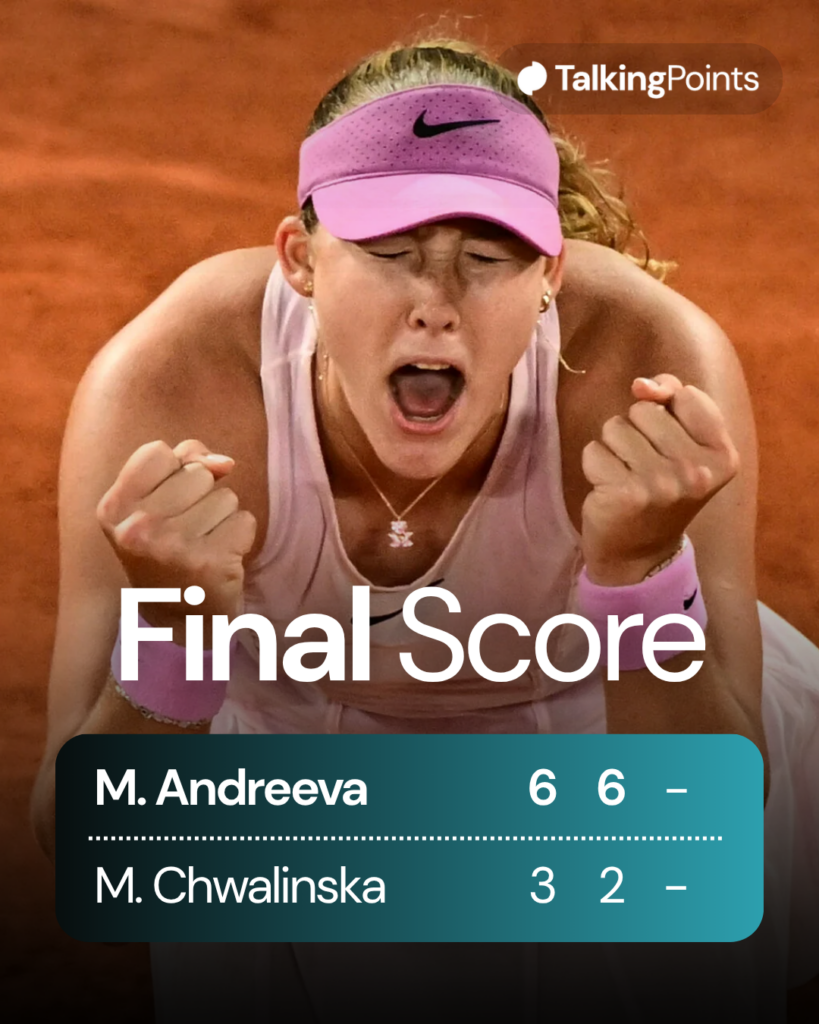
There, Andreeva exclaimed that she was not a champion, shouting to her box as she saw her 5-1 third-set lead slip away: “I’m not a champion, I’m not a champion. I will lose. I will lose. I choke.”
Whilst she went on to win that match, it was indicative of a player who was distinctly not in control of her emotions.
Whilst her talent and physicality are undeniable, and are particularly astounding given her youth, it seems she still has some way to go before she can reach the necessary maturity to control and limit such emotional outpouring.