
The ATP and WTA Tour schedules have been hot topics of discussion for well over a year, with various players concerned about the relentlessness of life on Tour.
In the last week, a number of high-profile players have expressed their concerns regarding the schedule.
The discourse was ignited by Iga Swiatek, a frequent advocate for reducing the number of WTA Tour events.
Swiatek described the schedule as overwhelming, before Coco Gauff bemoaned the ‘impossible’ nature of six mandatory WTA 500 events.
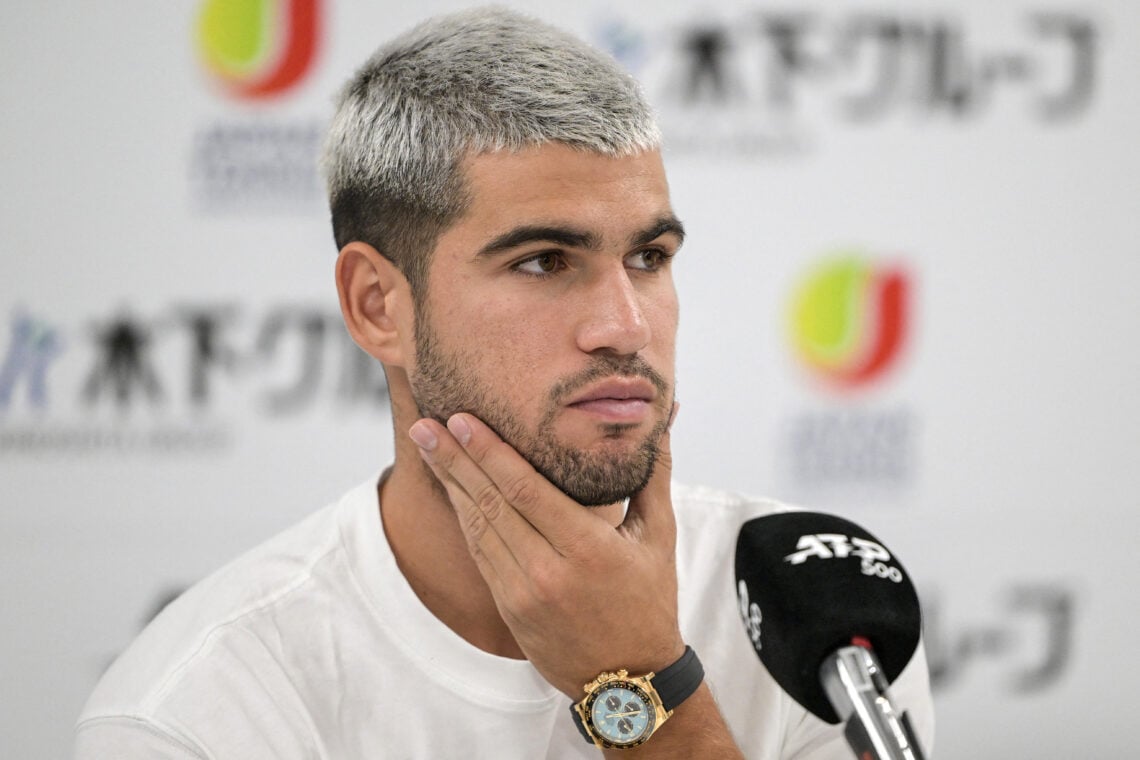
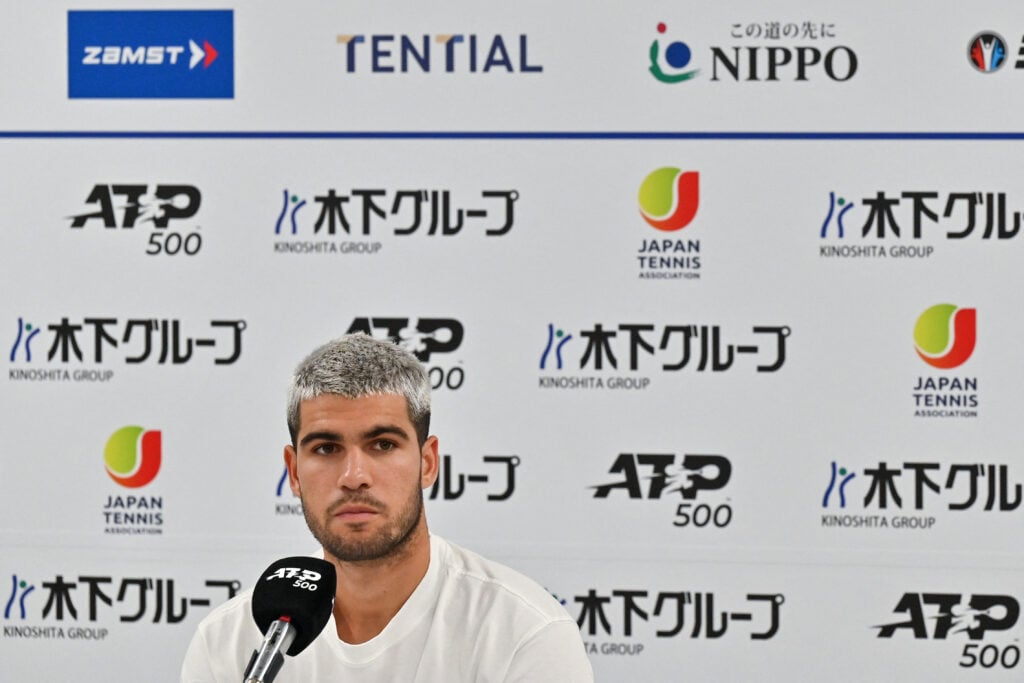
Carlos Alcaraz expressed his feelings on the matter after winning the Japan Open title, concluding that he agreed with Iga Swiatek’s sentiments.
Immediately after the Japan Open, Alcaraz withdrew from the Shanghai Masters, strengthening concerns regarding the schedule.
This matter was discussed further by Catherine Whitaker, a notable tennis commentator and co-host of The Tennis Podcast.
Catherine Whitaker says the extended ATP Masters 1000 events are an ‘absolute disaster’
Whitaker, while speaking to co-hosts David Law and Matt Roberts, discussed the mixed feelings she had upon hearing about Alcaraz’s withdrawal from Shanghai.
She said: “When I saw he had withdrawn from Shanghai, I felt the same, like ‘oh, gutted.’ Really long two weeks coming up without Carlos Alcaraz and without the potential promise of ‘Sincaraz’ at the end of it.
“But [I was] relieved from a big picture point of view. Even without the injury, you know, niggle, it seems like probably the right thing to do.
“I’m kind of always relieved when tennis players take a break, to be honest, because I just don’t see how you can play the full schedule and keep yourself in peak fitness and maintain yourself long-term.
“You have to kind of game the system now because of how the schedule is, in order to survive and make it sustainable, and we all want that for Carlos Alcaraz.”
Whitaker then discussed another aspect of Alcaraz’s withdrawal, and the incentives players have when deciding upon which events to participate in.
Whitaker continued: “However, looked at from another way, he’s played the Laver Cup – appearance fee, massive. He’s played Tokyo. And okay players are required to play a certain number of 500s in the year aren’t they. I think it’s two, might be three. Certainly two.
“So it’s not like the Laver Cup where, without the money, there’s absolutely no way he’d play there, but he was in Tokyo because – I don’t know the number – but he got a massive appearance fee.
“Bigger than whatever Beijing were offering and I think Beijing have quite a lot of heft in their chequebook.”
The commentator’s attention then turned to Alcaraz’s schedule, before describing the ATP’s decision to extend the length of Masters 1000 events as an ‘absolute disaster.’
“He’s going to play the Six Kings Slam I assume,” Whitaker continued.
“Big, big appearance fee, big, big prize dangling, and he’s going to miss Shanghai, which in theory, should be the biggest and most heavily incentivised tournament in amongst those.
“I don’t blame him personally. I think the ATP have created a system whereby they’re trying to incentivise players to play these botched two-week long Masters 1000 events with this bonus pool.
“Carlos Alcaraz, by skipping Shanghai, he now forgoes the bonus pool, he hasn’t played enough events. Jannik Sinner won’t get the bonus pool.
“I mean that’s partly because he served the suspension and I don’t think he would have ever been able to play the right number of events. Djokovic obviously isn’t going to have access to the bonus pool because he skipped so many.
“But it’s clear if you’re doing well enough at Slams, and if you’re winning a couple of them a year, as Alcaraz and Sinner are, your ranking is going to take care of itself.
“So the ATP, they’ve created a system where the main incentive to play these 1000s is financial now and Carlos Alcaraz doesn’t need to worry about that because he can get far bigger financial incentives elsewhere.
“I don’t blame him, because I think these two-week 1000s are an absolute disaster and he’s kind of going like ‘okay, if those are the rules of the game, I’m going to play by those rules and do it this way,’ and I think this is a symptom of a really broken system actually.”
The expansion of ATP Masters 1000 events
Since 2023, the ATP Tour have gradually expanded the duration of ATP Masters 1000 events as part of their ‘One Vision’ strategy.
By 2024, five of the nine Masters 1000 events had been extended to 12 days: Shanghai, Rome, Madrid, Miami and Indian Wells.
This year, two more Masters 1000 events were extended: the Canadian Open and Cincinnati Open.
Consequently, seven of the nine ATP Masters 1000 events now take place over 12 days, reducing the time off for players between tournaments.
Only the Monte-Carlo Masters and Paris Masters remain as week-long events.
The 2025 expansion also included an increase to the number of ATP 500 events, from 13 to 16.
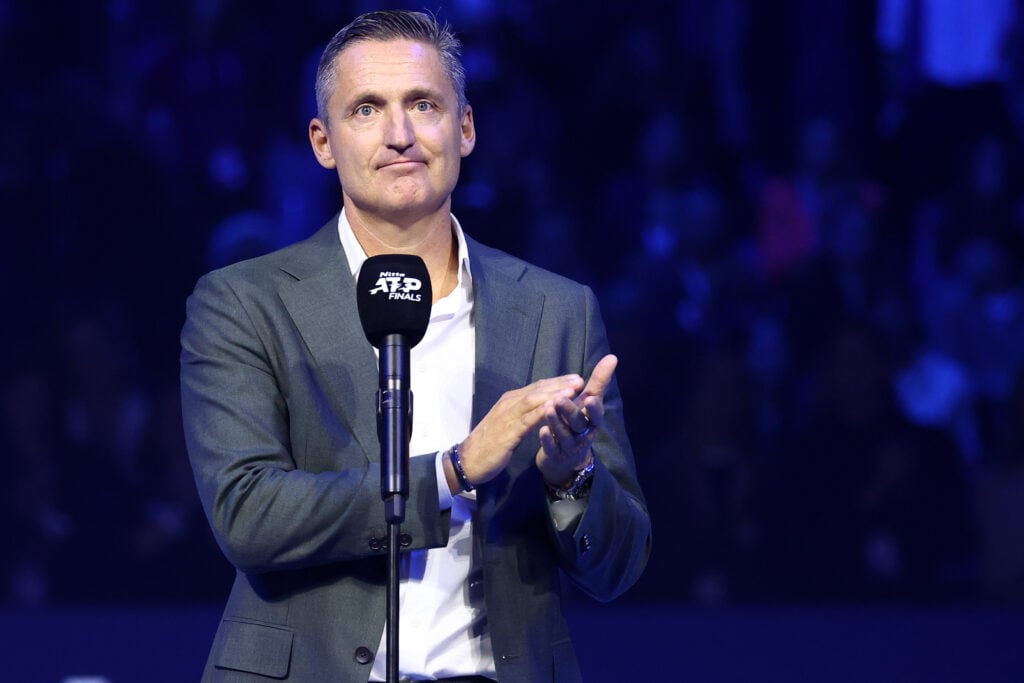
ATP Chairman Andrea Gaudenzi released a statement regarding the changes on the ATP Tour in March 2024.
He said: “Next season will see yet more enhancements to the ATP Tour’s premium product across a streamlined calendar.
“This is central to everything we’ve been building under OneVision, which ultimately aims to create the best possible experience for our fans.
“Last season we broke new ground, welcoming a record five million fans on site across our events. This is just one indication of how positively the sport is trending, and we believe there’s incredible potential to still be unlocked.”