


Can Arthur Fery win Wimbledon?
That is the question on the mind of every British tennis fan following Fery’s spellbinding campaign at this year’s Championships.
The 23-year-old has battled his way to the semi-finals in London, becoming only the second wildcard in the history of the Wimbledon Men’s Singles event to reach the last four.
Do you believe Arthur Fery can win Wimbledon?
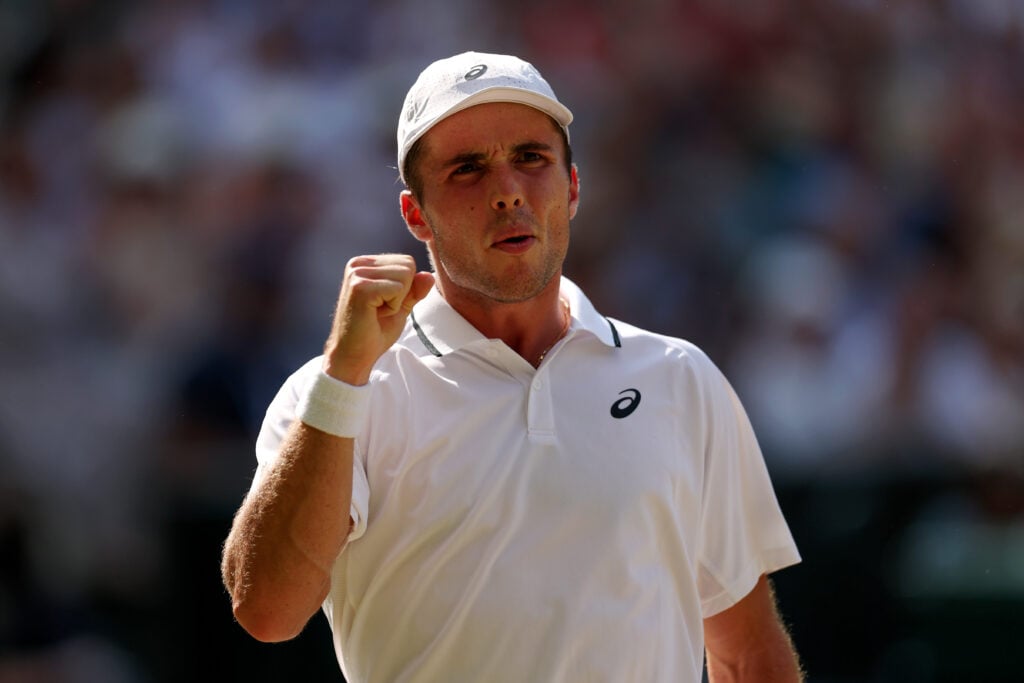
After defeating Flavio Cobolli on Wednesday, Fery is set to climb 78 places in the rankings and become the new British number one.
Speaking exclusively to Tennishead, Paul Goldstein believes Fery can climb even further up the ATP rankings before the end of 2026.
Paul Goldstein predicts that Arthur Fery will be a top-20 player by the end of 2026
“Let’s start with the fact that he wakes up this morning in the live ranks of 36 in the world. Let’s keep in mind that he’s been on tour for three years,” Goldstein, who was Fery’s coach at Stanford University, told Tennishead.
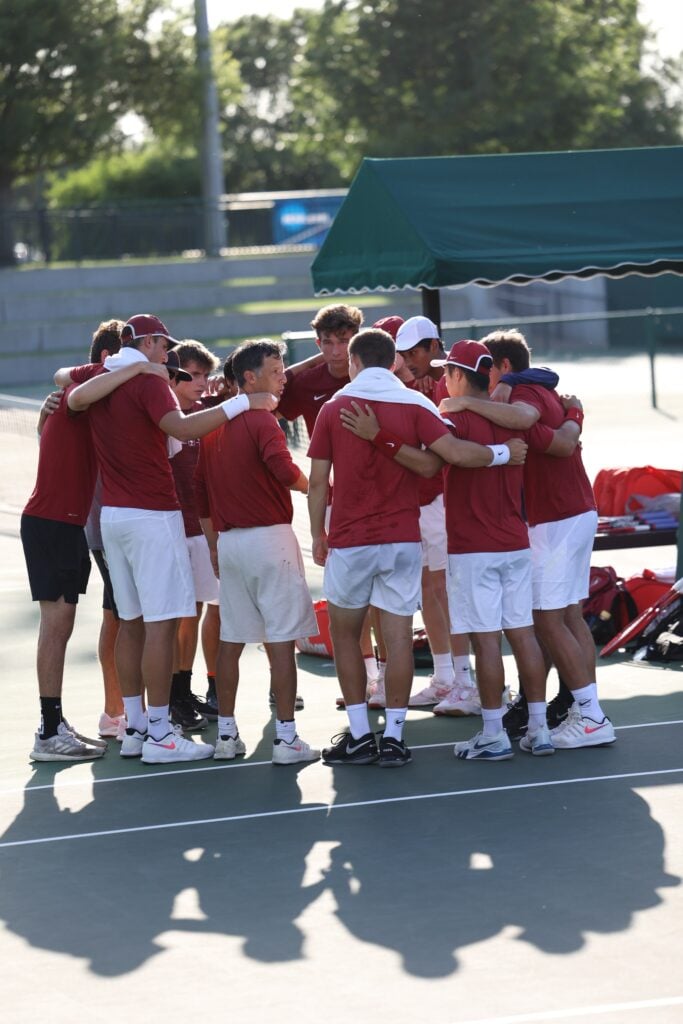
“His first two years, you have to check the stats on this, but he had lots of injuries his first two years.
“I bet in the first two years on tour, he wouldn’t have been able to play more than, I don’t know, 12 to 15 tournaments each of those years, and this is the first year we’re only halfway through the calendar year, and I bet he’s on tournament number 12 already this year.
Wimbledon Men’s Singles semi-finals
- Novak Djokovic vs Jannik Sinner
- Arthur Fery vs Alexander Zverev
“So being healthy is huge for him. If he’s able to stay healthy I think sky’s certainly the limit.
“This year, 13th tournament of the year – and I think he only played 14 all of last year and 15 all of the year before, and he’s already on 13 this year.
“So being healthy is huge for any athlete, but certainly he’s demonstrating that when healthy, he puts up good results.
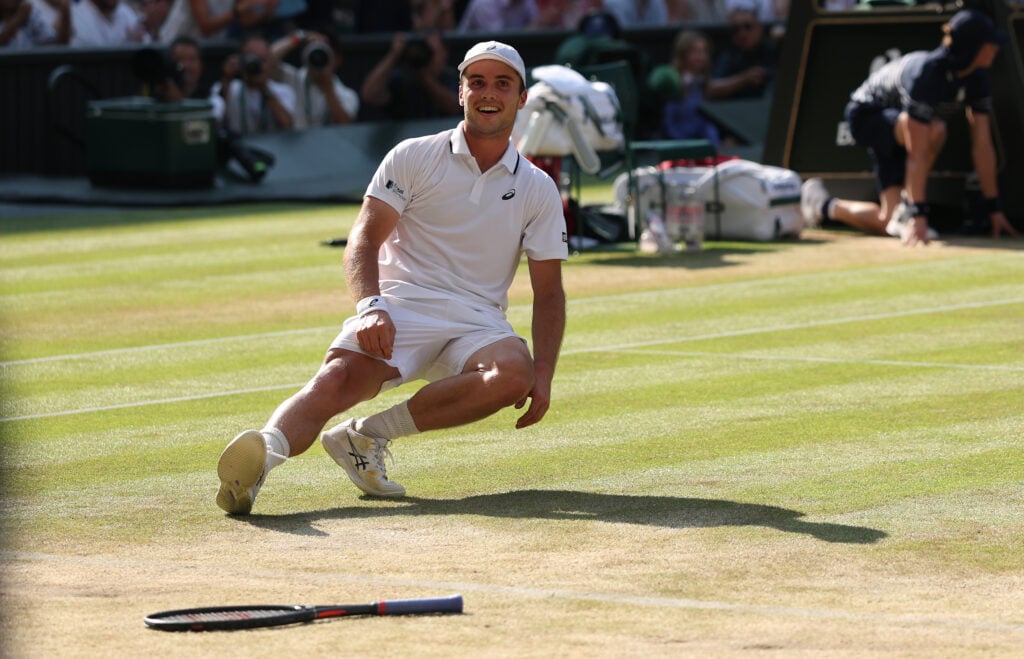
“But the winning percentage each of the last two years was very high, he just wasn’t able to play that much.
“And then, just practically, going to be 36th in the world, and the way the ranking system works is all of his major points have been put on – starting in the Australian Open – the last six months.
“So the next six months, he doesn’t have a lot of points to defend, and for the first time, he’s able to play.
“He’s got a shot at getting seeded at the US Open – forget about being main draw, he’s got a shot at being seeded.
| Ranking | Player | Points |
| 31 | Alejandro Tabilo | 1438 |
| 32 | Brandon Nakashima | 1435 |
| 33 | Ignacio Buse | 1413 |
| 34 | Matteo Arnaldi | 1349 |
| 35 | Zizou Bergs | 1340 |
| 36 | Arthur Fery | 1297 |
| 37 | Alexander Blockx | 1225 |
| 38 | Cameron Norrie | 1205 |
| 39 | Denis Shapovalov | 1130 |
| 40 | Corentin Moutet | 1123 |
“He’s going to be main draw 250s, 500s, Masters series events for the next six months!
“So just practically speaking, I think, if you’re a betting person, you’d be foolish not to predict that he’s going to be top 20 by the end of the calendar year,
“I mean, he’s at 36 already and has barely anything coming off the next six months, so I’m putting my money on top 20.
“And then he probably needs to show another gear to get to top 10. I wouldn’t necessarily bet against him, but that’s probably the next gear that he’s going to have to show.”
If Fery does the unthinkable and beats Alexander Zverev on Friday, he will rise into the world’s top 30.
If Fery were to win the title at the All England Club, he would most likely enter the world’s top-15 for the first time in his career.
Paul Goldstein discusses the US collegiate pathway and defends the LTA from criticism
The Lawn Tennis Association [LTA] have come under fire recently following the disappointing overall performance of British players at Wimbledon this year.
An astonishing 10 of the 11 players who compete on day one of Wimbledon did not advance, with four in total eventually booking their place in the second round.
Of that group, only Arthur Fery advanced.
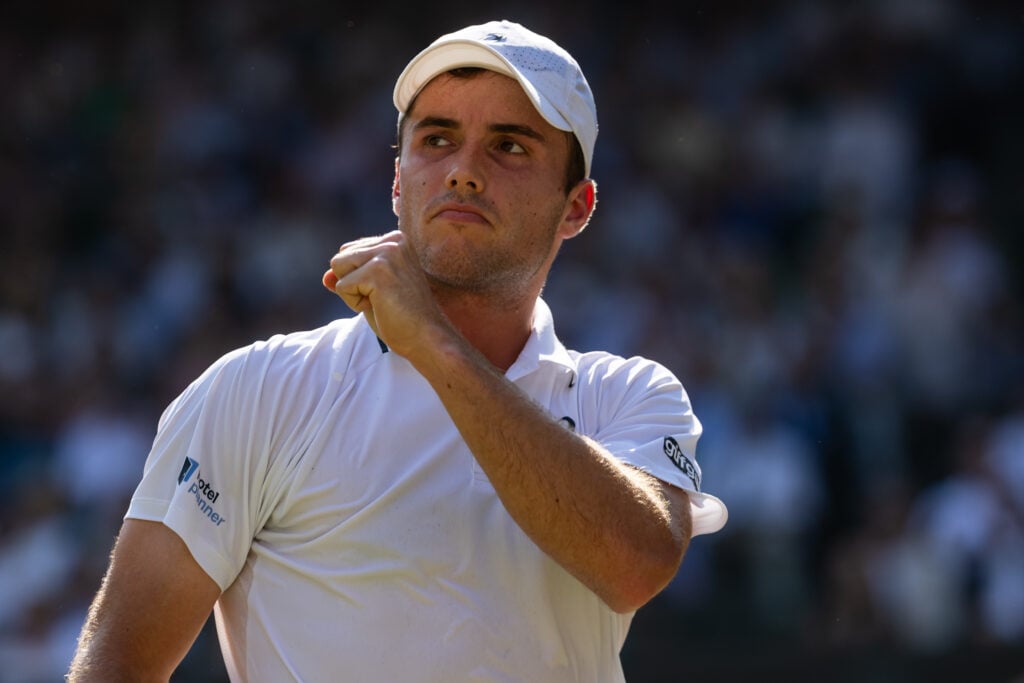
These performances have led some to suggest that the LTA are not producing enough top-level British players, while also in the same breath, noting the success of the American collegiate system in recent years.
Arthur Fery, Cameron Norrie, Jacob Fearnley, and Neal Skupski are just some of the notable British players who have plied their trade on the American collegiate circuit before going on to achieve great things on the professional Tour.
The LTA system have seen the likes of Jack Draper and Emma Raducanu go on to achieve great success on the professional circuit.
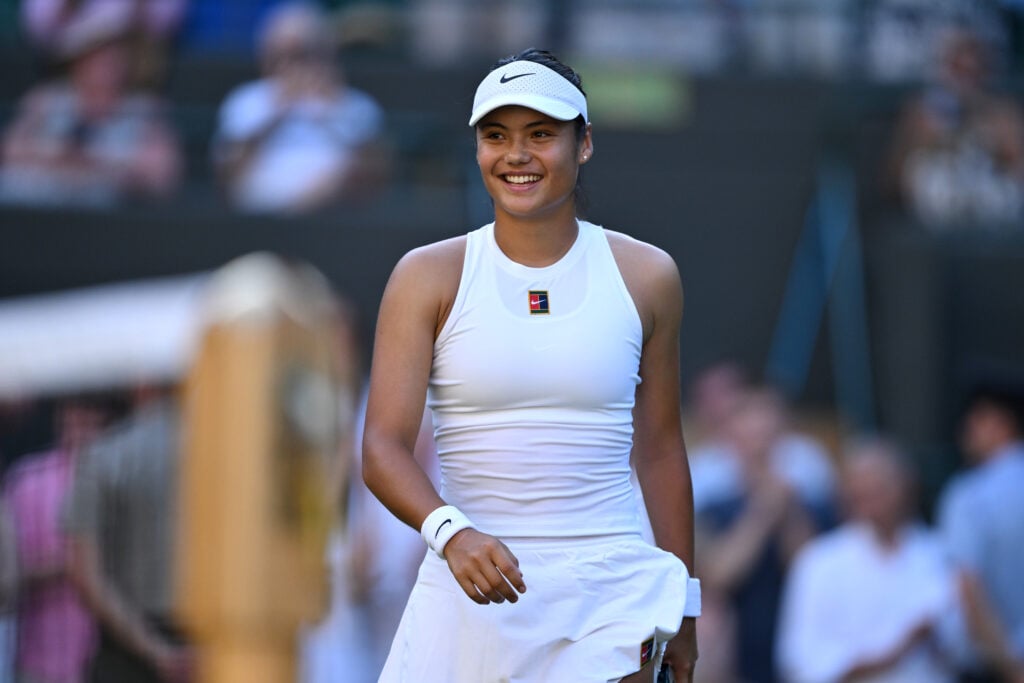
Paul Goldstein has now defended the LTA from the recent scrutiny.
“In terms of big picture LTA, gosh, it’s really hard to produce a champion as a federation,” the former world number 58 said.
“You can do all the right things, but then someone like Roger Federer comes along, and I don’t care what you do as a federation, it’s hard to supersede that.
“And so I’ve always felt like the goal of a federation is to put a system in place that gives you the best chance of producing top 100 players, or as many top 100 players as possible,
“To really put the onus on our federation to produce the best player in the world, I think is unfair, and not the point of what a federation is supposed to do,” he continued.
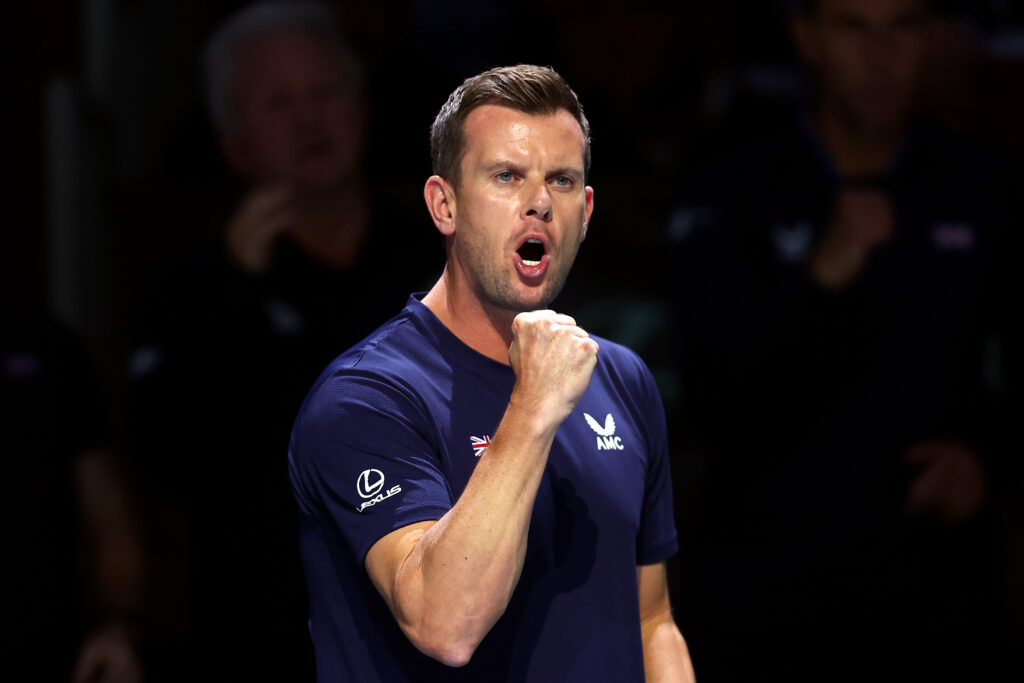
“Got a lot of respect for the people in the LTA and what they’re doing. Was on a call with Leon Smith yesterday and have a ton of respect and admiration for him and what he’s doing.
“I would say it is not unique to the LTA that international players are seeing that playing collegiate tennis is a viable path towards making an impact at the professional level in tennis more and more so recently.
“I don’t think that anyone should put a judgment on that as a good or bad thing one way or the other. And I say anyone, whether it’s a UK fan or an American, or a French person.
“There’s no judgment there. I just think it’s more and more being seen as a viable pathway.
“But we can talk about why it’s a viable pathway. And I think there are a lot of factors.
“One, the game – our sports, I think this is consistent across all of sport, pick your sport, has just become so physical. So physical. And so, especially on the men’s side, I think players are kind of having their peak years a little bit later.
“It’s really hard for – unless you’re really a physical freak like a Rafael Nadal, to have the kind of impact at 17, 18 at the professional level – it’s just so physical.
“Full credit to what Some of these teams are doing: Mensik, Jodar, Fonseca. But even Jodar played a year of college tennis.
“And so it’s just a couple more years for your body to physically develop and mature. And the US system just has a system in place with lots of resources dedicated to helping young student athletes. It matures both on and off the tennis court— both physically, emotionally, and tennis.
“And then the stronger the competition is in college, the more it attracts better competition, and the more iron sharpens iron. And so that’s why I think it’s being seen as a viable path – all those factors.
“One of the things Leon mentioned on the call yesterday is: I think the last Davis Cup team in September had five British males on it. I think all five had played some form of college tennis. Arthur was on that team. Fearnley was on that team. Cam Norrie, I know, was on that team. I’m not exactly sure of the other two.

“But the point is all five has spent some time in college tennis and I suppose the point I’m trying to get to is: for a long time, I feel like it was an either or situation of whether or not you go to college, or almost like, ‘okay, I failed if I have to sort of opt to go to college.’ It’s just not. It’s part of the journey.
“And I think the more people can get their mindsets around to that. And again, if you’re demonstrating results that 18 the way Fonseca is or Rafa, then of course you’re making an impact.
“But otherwise, it should not be looked at, viewed as a, I don’t know any other better word than ‘failure,’ to sort of elect to spend a year or four in college to help hone your skills to make an impact at the Tour level. And then the tour will let you know when you’re ready.
“If you’re winning two out of three or three out of four matches on tour, you might be ready.
“But if you’re not, there’s more honing that probably needs to be done. But I think 23 of the 128 players in the main draw of the French Open this last year had some form of college tennis experience and so it’s being played at a really high level.
Where does Cameron Norrie rank among the best British players in tennis history?
Cameron Norrie’s career titles
- Los Cabos Open
- Indian Wells Open
- Delray Beach Open
- Lyon Open
- Rio Open

“And just this year alone Arthur is in the semis, Michael Zheng just graduated a mere two months ago. Call in one. I think he made third round [second round]. He literally just graduated in May, so a couple months ago. So that’s the level being played in college tennis.
“I don’t know the stats from Wimbledon this year, how many college players were in there, but Max Basing got through and qualified. You know, Max played for me at Stanford, he’s from Surrey and grew up around Wimbledon. Family, I think were members of Wimbledon. And he got to play main draw at Wimbledon after qualifying through Roehampton.
“So the point I’m trying to make is competition level in college is being played at an extraordinarily high level.”