
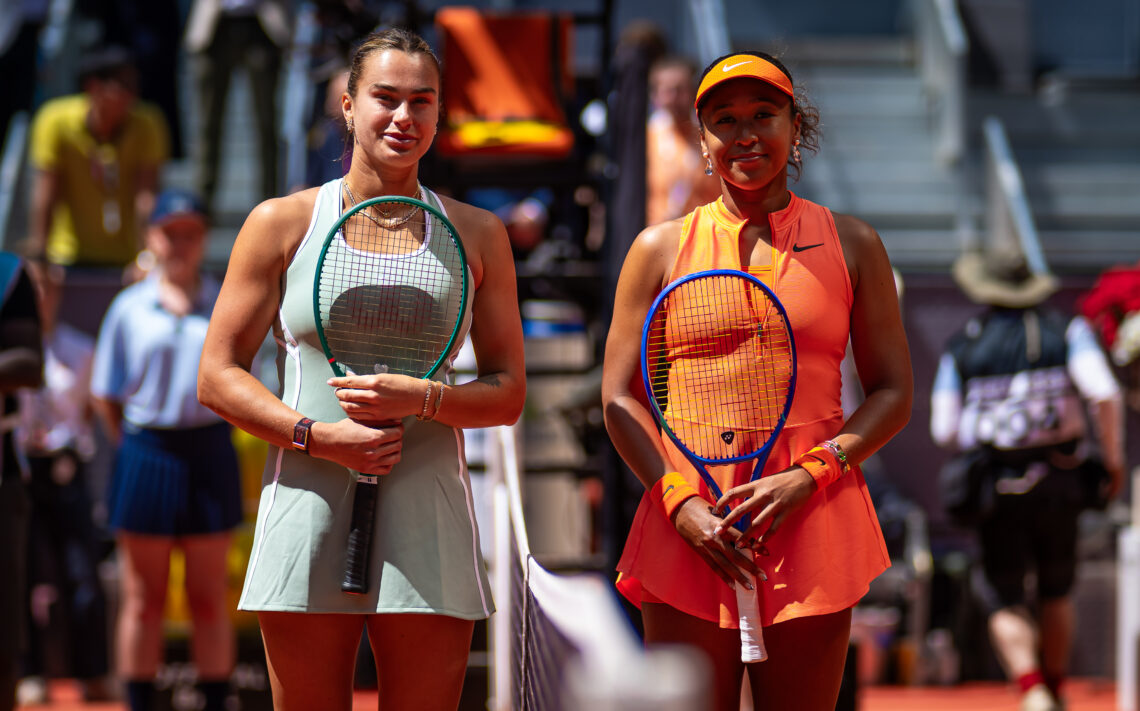


Aryna Sabalenka and Naomi Osaka are set to contest the first women’s night match at Roland Garros for over three years.
Since Roland Garros introduced one-match night sessions in 2021, only four women’s singles matches have been scheduled for that slot.
The last women’s singles match to take place during the night session was Aryna Sabalenka’s contest against Sloane Stephens in 2023.
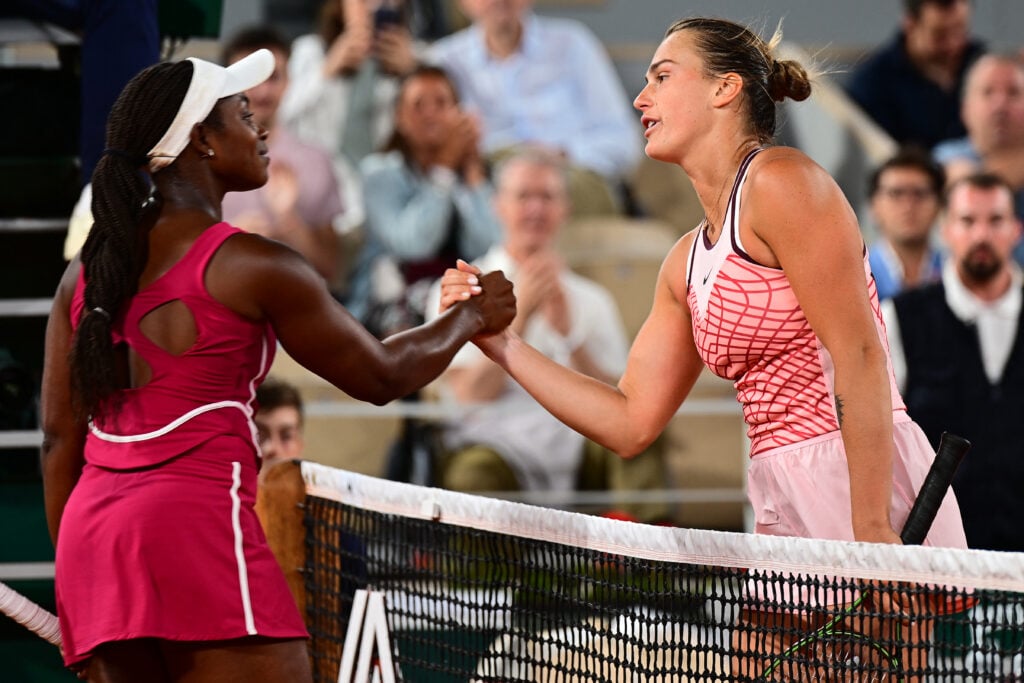
Sabalenka is set to contest the fifth match of its kind on Monday evening – a contest described by Elina Svitolina as an ‘important step for women’s tennis.’
Brad Gilbert and Andrea Petkovic have now weighed in on the decision of Roland Garros organisers, pointing out the unfair pressure that is now on the shoulders of Sabalenka and Osaka.
Andrea Petkovic notes the ‘unfair’ pressure on Aryna Sabalenka and Naomi Osaka
Brad Gilbert, the former coach of Andy Murray, Andre Agassi, and Coco Gauff, began the discussion by expressing his ‘fear’ for Sabalenka’s contest against Osaka.
“I believe that is the first women’s match on centre court in a couple of years in the evening,” the American coach said on the Big T Podcast.
“But what I’m fearful of, hopefully we don’t get a blowout and then everybody says, that’s why you don’t put [women in the night session]. But that was to my point, you [should] play two matches [in the night session].
Naomi Osaka and Aryna Sabalenka have been confirmed as a night session match… is this the right call?
Could it hurt women's tennis if the match is not a thriller?
“I feel like they’re both power players, but Sabalenka is better with the forehand, plays a little defence and has a little more variety.
“I feel like that’s a straight set match for Sabalenka and I think slower conditions are probably better for Sabalenka.
“I think Osaka would have had a better chance in the hot fast conditions.”
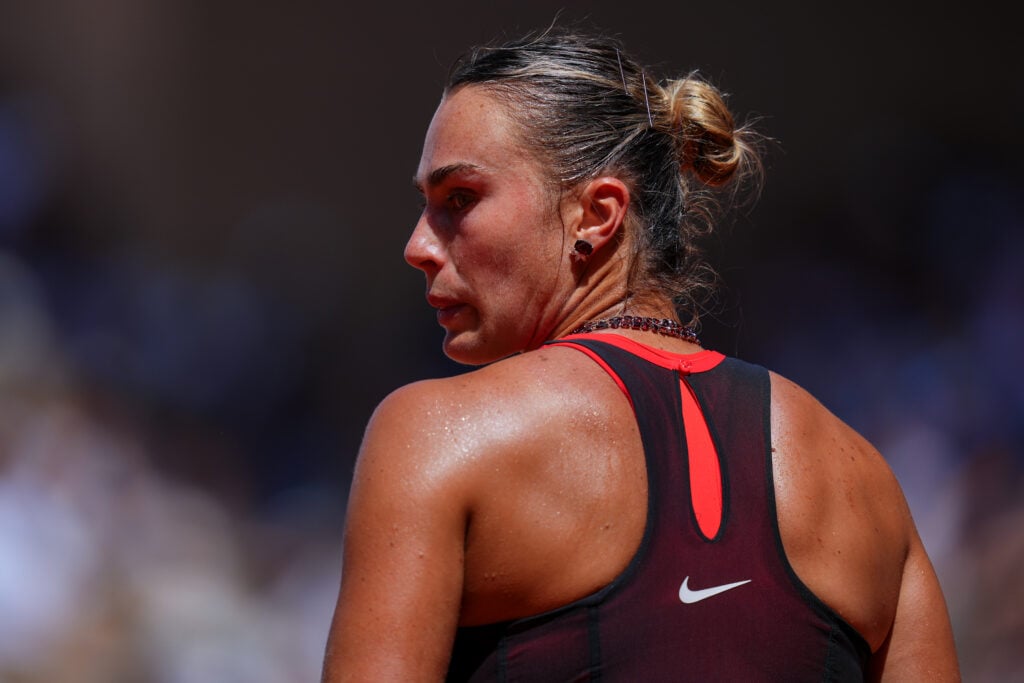
Andrea Petkovic [pictured below], the former world number nine, stated that she agreed with Gilbert’s analysis of Sabalenka’s game.

“I agree with you and I think the fact that Aryna Sabalenka has added all these elements to her game in the last few years will really come to help her now that sort of the two best clay courters on her paper have gone out in Coco Gauff and Iga Swiatek,” the German said.
“Aryna can play defence now, she can go to the net, she can play drop shots now. So I do think that she is the player to watch here.”
Gilbert then built upon his previous analysis, noting the unjustified pressure that is now on the shoulders of Sabalenka and Osaka.
“I’m rooting for a close match here,” Gilbert said. “Because I’m sure they’re worried about, they did put this woman’s match on, but they should have at least put like a men’s doubles.
“Put two matches on the schedule!”
Petkovic again agreed with Gilbert, stating that the pressure on Sabalenka and Osaka is far from fair.
“”It’s so unfair, because it’s just not in your control,” she said.
“Last year at the US Open actually, we had horrible matches on Arthur Ashe all the time and then the semifinals of the women’s was the best day ever!
“It was two, three hour matches, but it’s not in your control.
“Sabalenka beat Pegula in three sets and then Amanda Anisimova beat Naomi Osaka in three sets and was two of the best matches I had watched all year, but it could have been one and one both and it’s just not in your control.
Can anyone realistically stop Aryna Sabalenka from going ‘all the way’ at Roland Garros this year? 🏆

“So it’s unfair to put so much pressure on one women’s match and now they gave to deliver, otherwise the next five years we won’t see a women’s match.
“It’s not fair!”
Petkovic is absolutely correct: the pressure on Aryna Sabalenka and Naomi Osaka is completely and utterly unfair.
This pressure has materialised as a direct result of Roland Garros organisers’ decision making over the last three years.
To not have any women’s matches scheduled in the primetime slot for almost three years is frankly ludicrous, and one hopes Roland Garros organisers adjust their strategy moving forwards.
Who could Sabalenka or Osaka play in the quarter-finals?
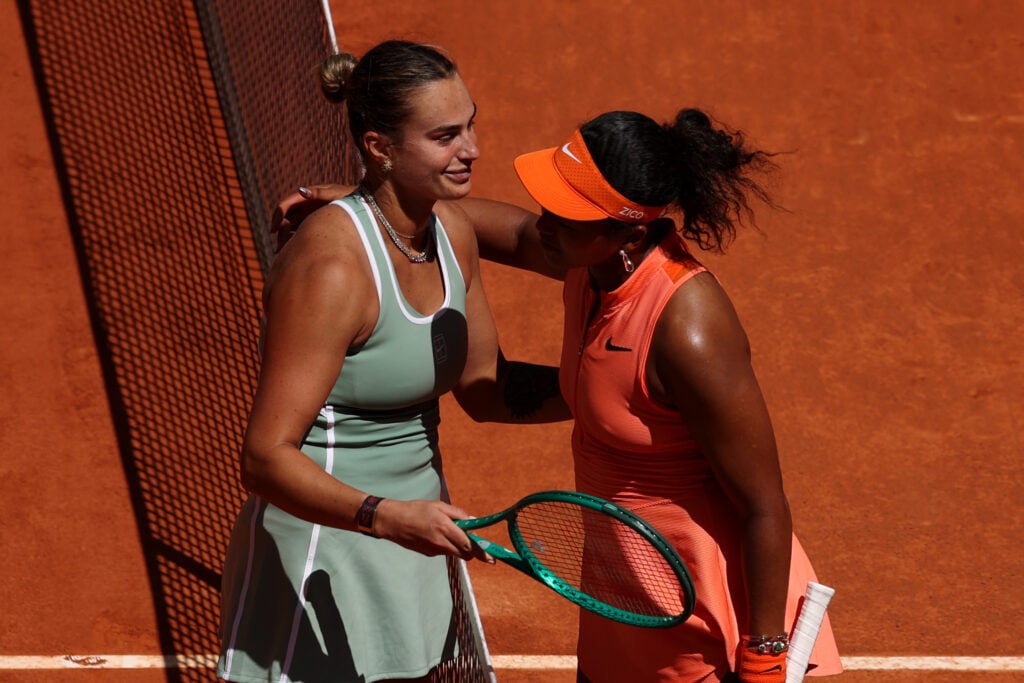
Sabalenka and Osaka are scheduled to contest their fourth match on the WTA Tour.
Sabalenka leads their head-to-head record 2-1, beating the Japanese star twice already this year.
The Belarusian defeated Osaka in Indian Wells and Madrid, and will be hoping to win her third match in three months against the Japanese star on Monday evening.
The winner of Sabalenka and Osaka will play either Madison Keys or Diana Shnaider in the Roland Garros quarter-finals.

Keys, the 2025 Australian Open champion, is seeking to reach the French Open quarter-finals for a second consecutive year.
Meanwhile, Shnaider has already achieved her career-best at a Grand Slam event by reaching the fourth round in Paris.
Shnaider had never advanced past the second round of a major singles event prior to this year’s French Open.


