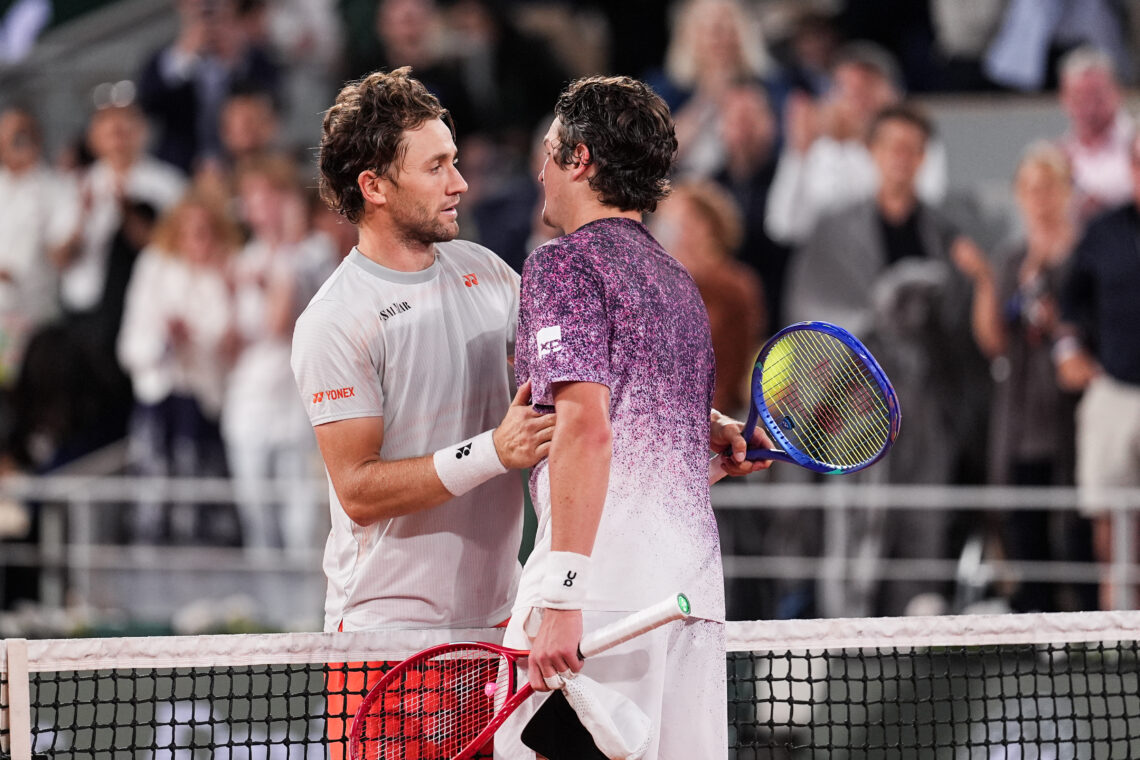


Joao Fonseca’s victory over Casper Ruud on Sunday was marred by line-call controversy.
At 8-7 to Ruud in the second set tiebreak, Fonseca struck a shot that seemed to have landed slightly long.
A member of the crowd shouted out, seemingly calling the ball out. However, no call came from the line judge, nor the chair umpire.
The umpire then left her chair to inspect the ball mark, deeming Fonseca’s shot to have caught the baseline.
However, the Hawkeye system revealed to viewers at home that Fonseca’s shot was indeed out, meaning Ruud would have tied the match at one set all, had electronic line calling been in use.
After controversy in Casper Ruud’s match, Roland Garros now NEEDS to implement electronic line calling 😬
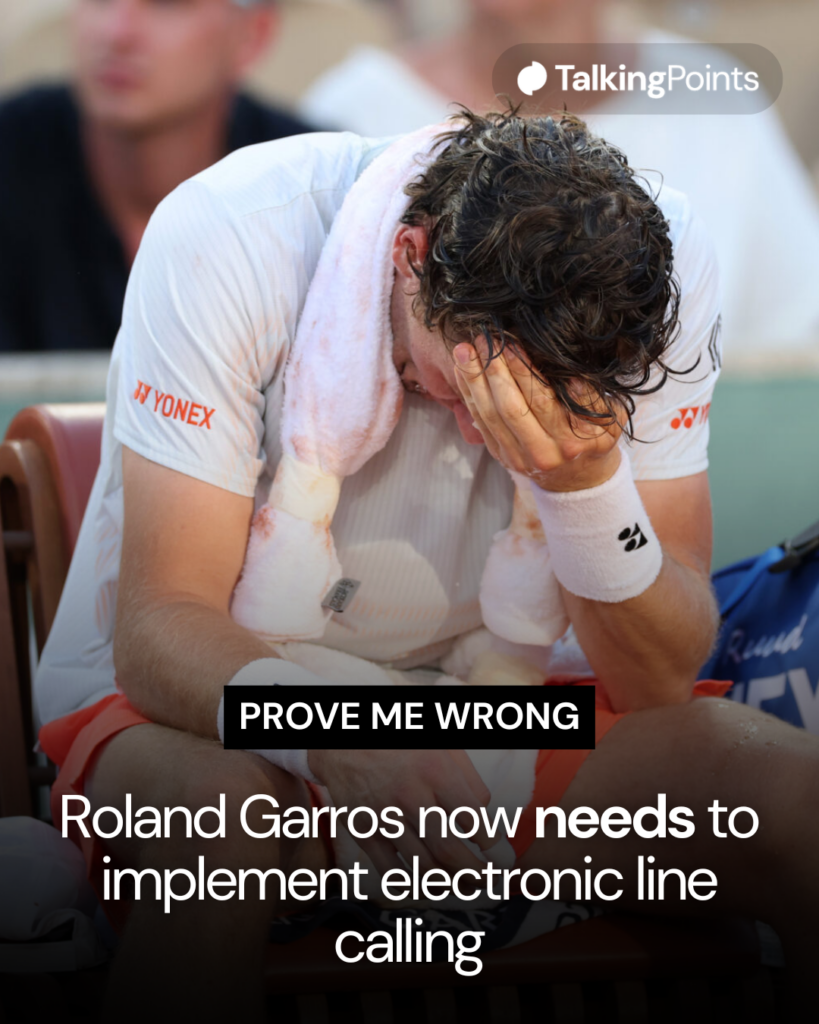
Ruud went on to lose the tiebreak, and eventually the match: 5-7, 6-7, 7-5, 2-6.
Amelie Mauresmo, the Roland Garros tournament director, has now suggested whether electronic line calling will be in use at next year’s Roland Garros event.
Amelie Mauresmo says whether Roland Garros will install electronic line calling at next year’s event
During a press conference held on Monday, Mauresmo [pictured below] was asked if the tournament will bring in an electronic line calling system for next year’s event, following the controversy that occurred on Sunday evening.

“This question we asked ourselves after the tournament each year,” Mauresmo told reporters in Paris. “We stay open to everything and every new technology that is available to us.
“The thing is that as of today and from what we have seen in the previous clay court tournaments in the last few months, is that it appears the technology on clay is not 100 per cent reliable.
“Also when you see Casper’s reaction last night, from what I saw, he was not shocked by the umpire’s decision.
“It’s also that we have to keep in mind that this technology as of today is not 100 per cent reliable.”

Mauresmo, a two-time Grand Slam champion, also commented on whether she is happy with the line calling during the opening week of this year’s event.
“I think it’s gone well opening week of the tournament and first week of the tournament so far,” the former Wimbledon champion said.
“The machine is not 100 per cent reliable,” she reiterated. “So we give the confidence to the human.”
Roland Garros remains the only Grand Slam on the professional circuit still using human line judges over the electronic line calling system.
The Australian Open were the first to fully introduce the system in 2021. The US Open followed suit in 2022, as did Wimbledon in 2025.
The French Tennis Federation’s statement on using human line judges
“We are a federation where umpires and line judges work every day and, I say this with all humility, we are the best country for providing officials on the tour,” said FFT president Gilles Moretton said in September last year, as reported by Sky Sports.
“We take pride in this, we have a strong training system. We are a benchmark and we want to stay that way.
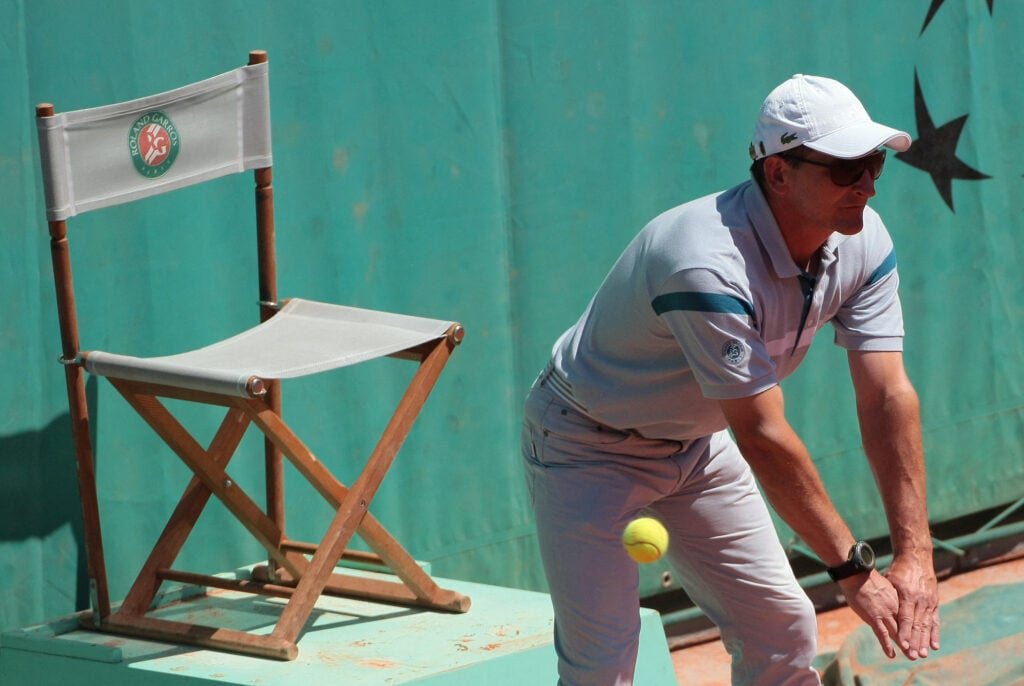
“The federation’s will is to keep line judges as long as possible; right now, the players are driving the train.
“If one day they unanimously say: ‘We won’t play without the machine,’ we’ll see.
“But I believe we have a bright future ahead to preserve this officiating pyramid.”
While there will always be issues with accuracy when using human line judges, the ELC system has also sparked its fair share of controversy.
For example, at the 2025 Wimbledon Championships, the system malfunctioned during a crucial point in Sonay Kartal’s match against Anastasia Pavlyuchenkova.