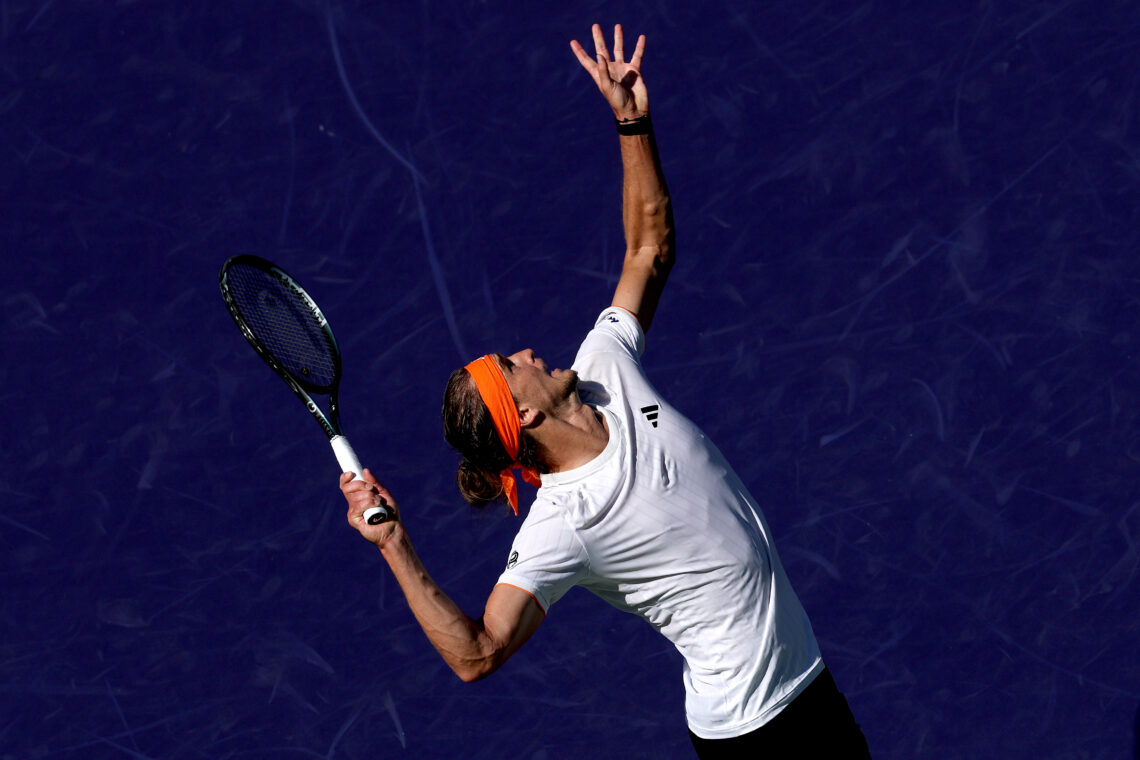


Alexander Zverev double-faulted his way to defeat in the 2020 US Open final against Dominic Thiem.
The German led two sets to love, before capitulating in New York, serving 15 double faults in his 6-2, 6-2, 4-6, 3-6, 6-7 defeat.
Double faults troubled Zverev for years, costing him chances to win some of the biggest titles in professional tennis.
Do you think Alexander Zverev has what it takes to win a Grand Slam?

However, during the latest episode of ‘Nothing Major‘, serving great John Isner claimed Zverev had fixed the problem.
John Isner says Alexander Zverev’s double-faulting years are behind him
The former world number eight believes Zverev has one of the best serves in tennis.
“He has serve bot stats on his serve, but he’s not a bot,” said Isner.
“He returns ridiculously well, for being six foot six, we haven’t seen anyone, I mean, he and Meddy [Daniil Medvedev] are the same height, but two guys that tall, that return that well, and break serve as consistently as they do.
“But he has countless matches where he’s serving like 74% on the first serve, what are you going to do?”
- Alexander Zverev’s first serve % in 2026 – 74%
Furthermore, Isner thinks Zverev has fixed the double-fault problem that plagued his game for several years.
“It’s tough, he can hit his spots, and he’s not double-faulting,” said Isner.
“Those years are behind him, those double-faulting woes.
“His serve is huge.
“He’s got it going on on that side, for sure.”
Zverev is averaging 1.5 double faults per match in 2026.
Alexander Zverev’s double faults in 2026
| Tournament | Double faults | Matches | Average double faults |
| Australian Open | 10 | 6 | 1.7 |
| Mexican Open | 2 | 2 | 1 |
| Indian Wells | 5 | 4 | 1.3 |
| Total | 17 | 12 | 1.5 |
A remarkable improvement from the numbers he put up previously.
Alexander Zverev’s average double faults per match (2017-2026)
- 2017 – 3.5
- 2018 – 2.9
- 2019 – 5.9
- 2020 – 5.6
- 2021 – 3.8
- 2022 – 3.7
- 2023 – 2.9
- 2024 – 2.2
- 2025 – 1.9
- 2026 – 1.5
Zverev’s double-faults peaked in 2019, when he served 5.9 per match for the season.
Reducing that average by 4.4, it’s no surprise Zverev is starting to find some consistency on tour.
That’s not to say his game is perfect, though.
Many still criticise Zverev for his tendency to play passively in important moments.
Time and time again, the German refuses to play the aggressive shots when it matters most.
Still, it’s important to recognise the improvements he has made.
What was once his most glaring weakness is now his greatest strength.
How bad was Alexander Zverev’s serve in the 2020 US Open final?
To put it simply? Very bad.
The quantity, 15, is enough to make you wince, but it was the inopportune timing of those double faults that really cost him the US Open title.
In one of the lowest quality Grand Slam finals in recent memory, Zverev and Thiem stumbled into a deciding match tiebreak.
It was there that Zverev delivered two of the most costly double faults of his tennis career.
The first of which came at 2-1, when he led the Austrian by a mini break.
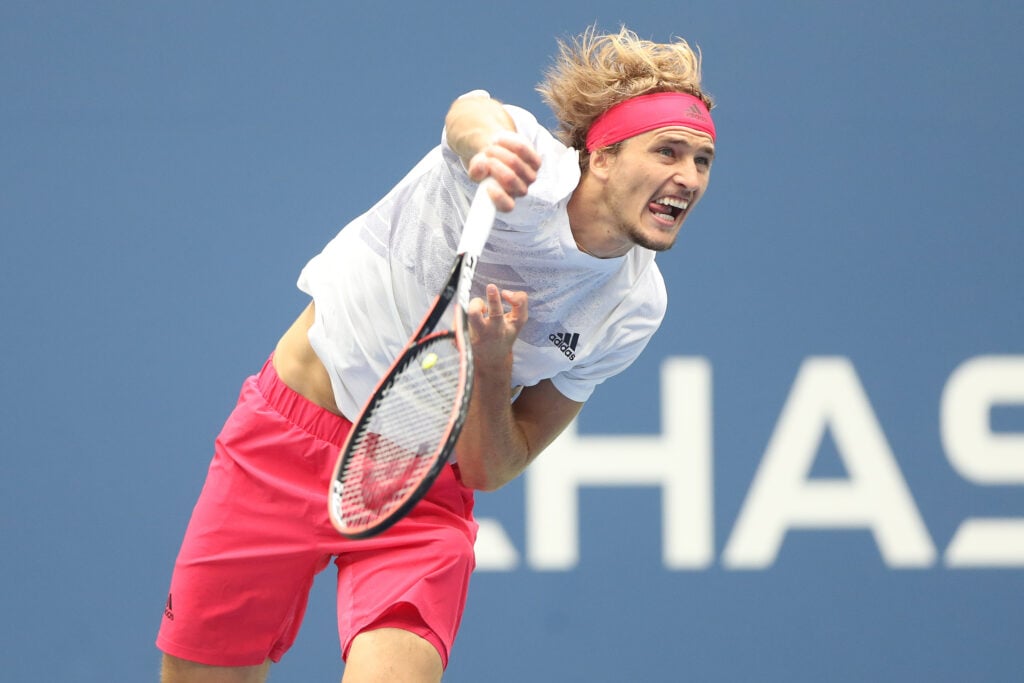
Zverev’s second serve practically hit the middle of the net, barely threatening to go over.
A second double fault of the tiebreak followed shortly after, giving Thiem a minibreak as he fell behind 3-5.
Five minutes later, a Zverev backhand went wide, and Thiem was crowned the US Open champion.
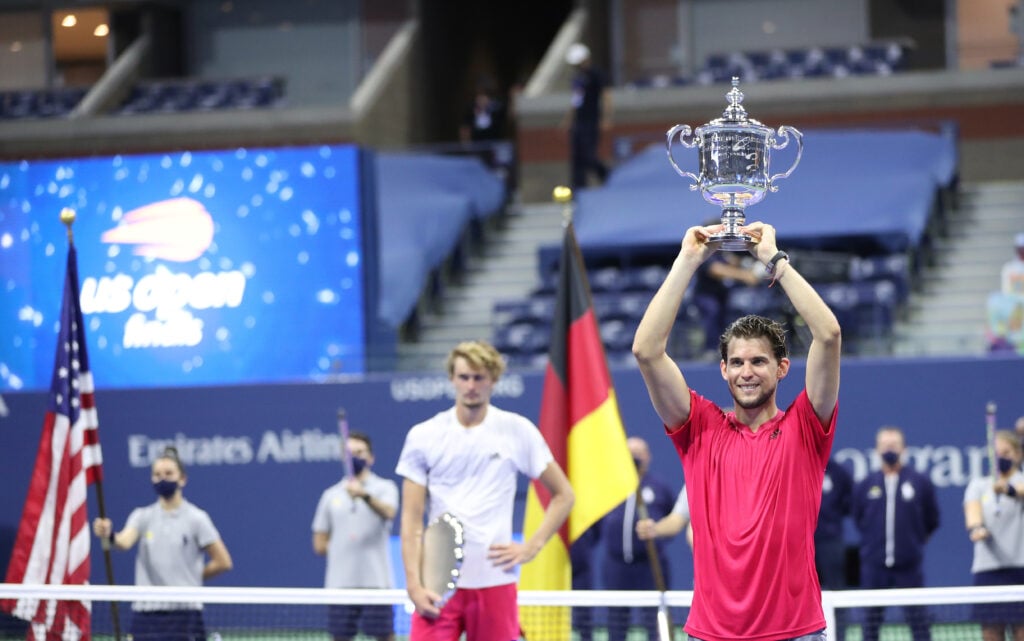
Zverev lost the fifth set tiebreak, 6-8.
Had he won the two points he double-faulted, the outcome could have been very different.
Luckily for Zverev, if he ever returns to a Grand Slam final, he’ll have more faith in his serve than he did six years ago.
With the absence of any double-faulting doubt in his mind, perhaps Zverev can finally get his hands on an elusive major trophy…